Retaining Wall Contractor in Amityville

Stop Erosion Before It Damages Your Property

Get a retaining wall that actually handles Amityville’s sandy soil and coastal weather—built by contractors who know Long Island conditions inside and out.
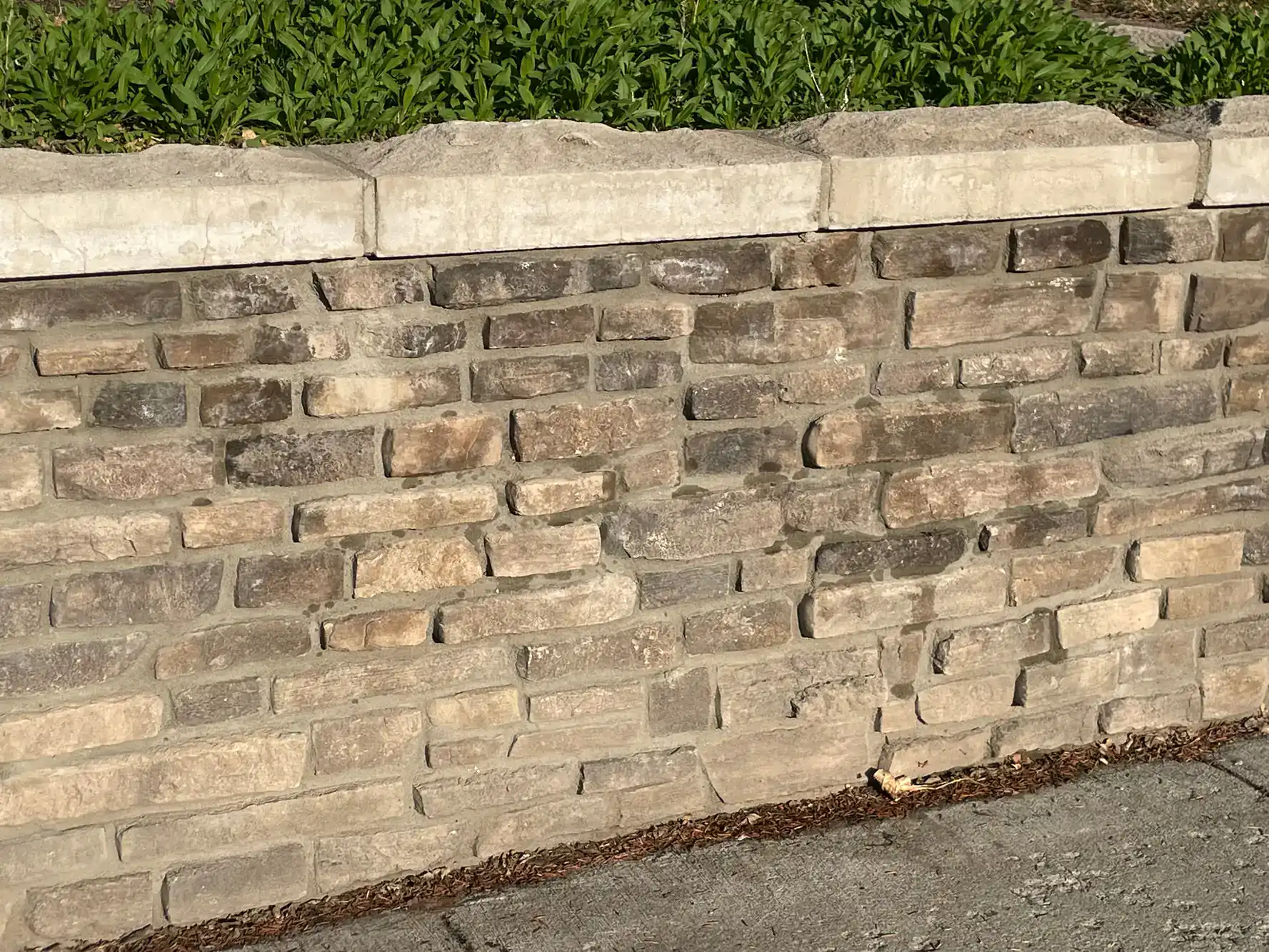
A stone retaining wall made of rectangular, tan and brown bricks supports a raised bed with green plants. Sunlight casts shadows on the textured wall and gray sidewalk below.

Hear from Our Customers

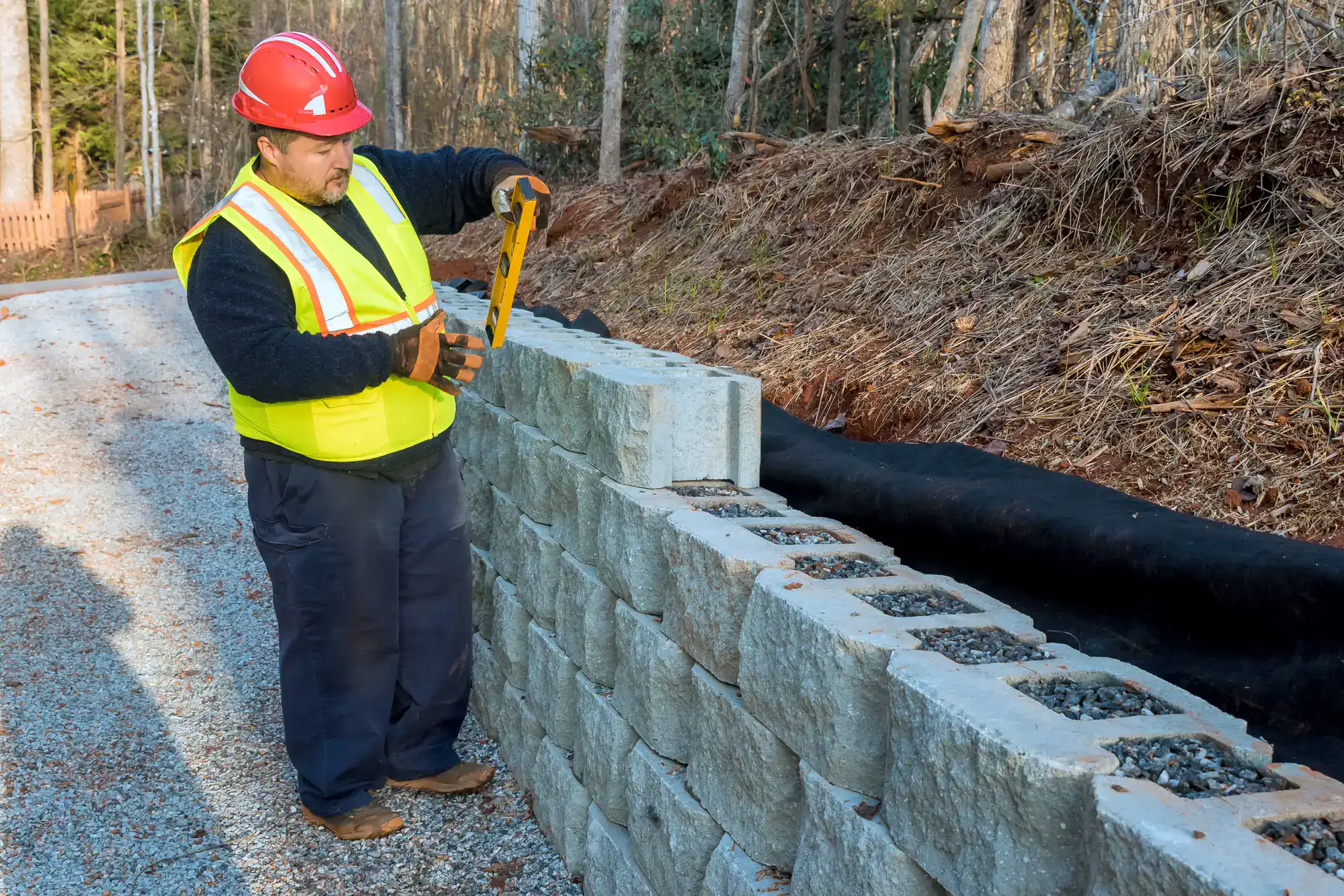
A construction worker in a yellow safety vest and red helmet uses a level to check concrete blocks while building a retaining wall next to a gravel road and a slope with trees.

Retaining Wall Installation Amityville NY

Transform Slopes Into Usable, Protected Space
You’ll finally have stable ground where water used to wash away soil and create problems. Your sloped areas become functional outdoor space while protecting your foundation from shifting soil and drainage issues. No more watching storms wash away your landscaping investment. No more worrying about erosion threatening your home’s foundation. Your retaining wall handles Amityville’s sandy soil conditions and coastal weather, giving you peace of mind and more usable property. The right retaining wall doesn’t just hold back dirt—it manages water runoff, prevents costly erosion damage, and adds value to your property. You get both protection and beauty that lasts decades.

Stone Wall Installer Amityville NY

Licensed Masonry Contractors Who Know Amityville
We’ve been building retaining walls across Suffolk and Nassau Counties, including right here in Amityville. Owner Iain Traynor brings union masonry experience and stays involved in every project from estimate to completion. We’re licensed in Suffolk, Nassau, and Long Island townships. We’re certified installers for Cambridge, Unilock, Techo-Bloc, and other major manufacturers. That means we build to their specs and back our work with proper warranties. Amityville’s sandy soil and coastal location create specific challenges that generic contractors don’t understand. We design every wall for Long Island conditions—proper drainage, frost-line depth, and materials that handle salt air and freeze-thaw cycles.
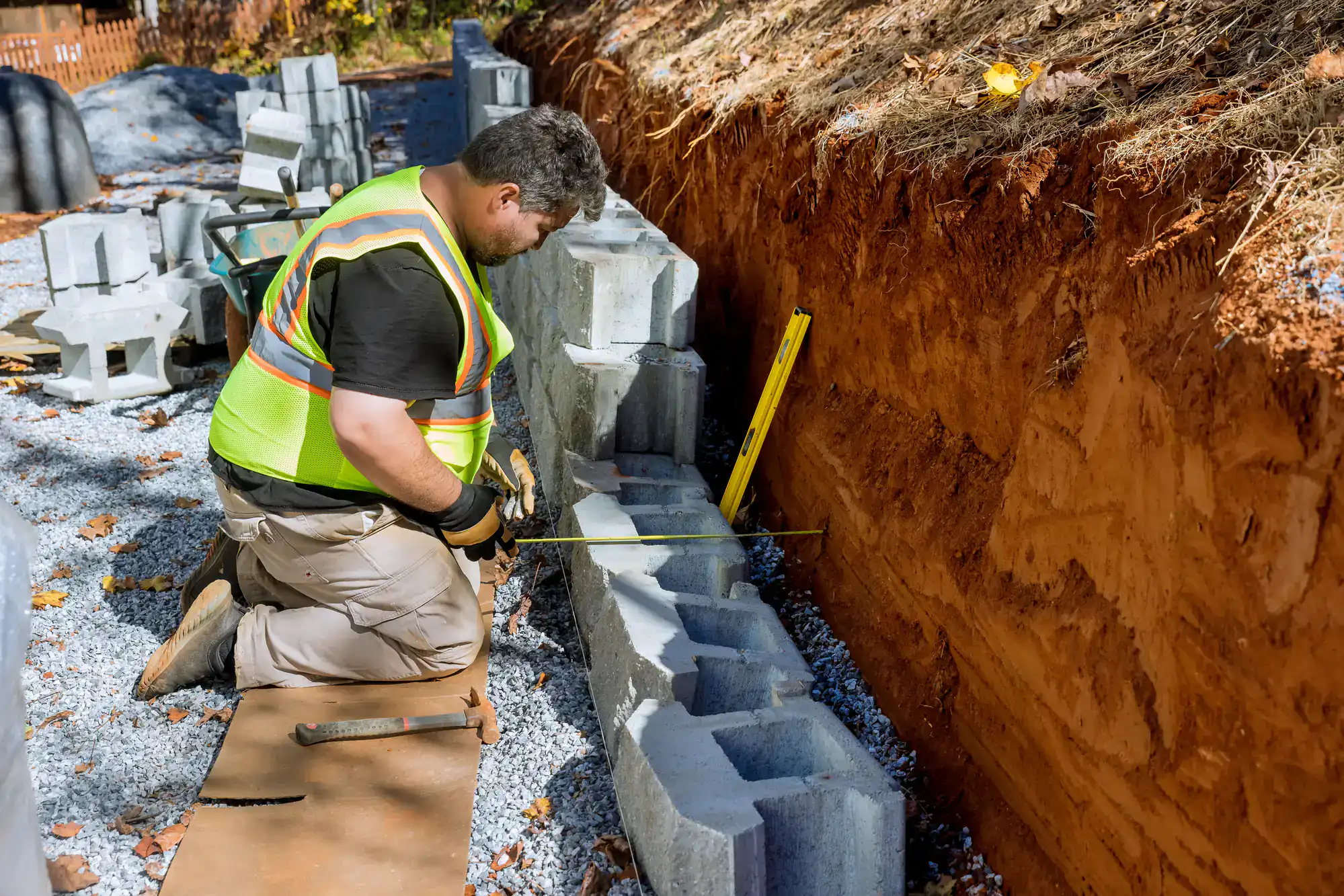
A construction worker in a safety vest kneels on gravel, measuring concrete blocks as he builds a retaining wall beside an exposed dirt slope. Tools and blocks are scattered around the worksite.

Retaining Wall Builder Amityville NY

How We Build Walls That Last
We start with an on-site evaluation where Iain assesses your soil, drainage patterns, and grade requirements. No generic solutions—every wall is engineered for your specific property conditions and Amityville’s sandy soil characteristics. Excavation goes 8-10 inches deep, reaching below the frost line to prevent heaving. We install proper base layering with crushed stone and ensure adequate compaction. Drainage planning happens from day one because water management makes or breaks retaining walls on Long Island. Each course gets installed to manufacturer specifications with proper edge restraints and backfill materials. We integrate drainage systems including weep holes and French drains where needed. The same crew stays on your project from start to finish—no subcontractors, no confusion.
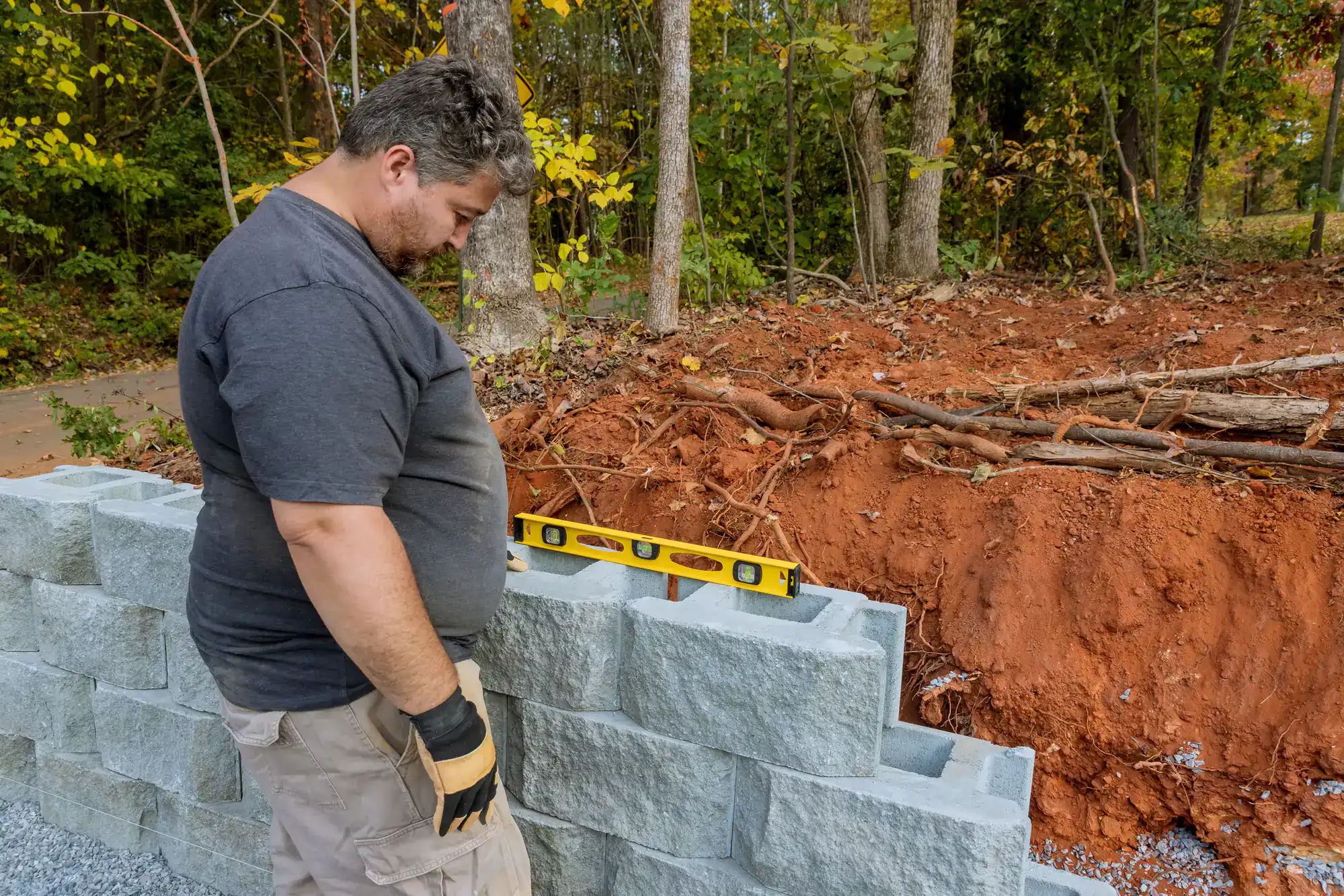
A man wearing gloves checks the level of a gray stone retaining wall with a yellow spirit level, next to a dirt embankment and forested area.

Ready to get started?

Explore More Services

About Stone Escapes Masonry & Outdoor Design

Get a Free Consultation

Retaining Wall Specialist Amityville NY

What's Included in Professional Installation
Your retaining wall installation includes proper site preparation, excavation to frost-line depth, and engineered base preparation designed for Amityville’s soil conditions. We use manufacturer-certified materials and follow strict installation guidelines that come with warranty protection. Drainage systems are built in, not added as an afterthought. This includes perforated pipes, gravel backfill, and weep holes positioned to handle Long Island’s water table and storm conditions. We plan for nor’easters and coastal weather from the start. In Amityville, we see properties with existing drainage issues from poorly built walls that failed within a few years. Our walls include geotextile fabric separation, proper compaction at each level, and materials selected for salt air resistance. You get a wall built to handle decades of Long Island weather, not just look good for a few seasons.
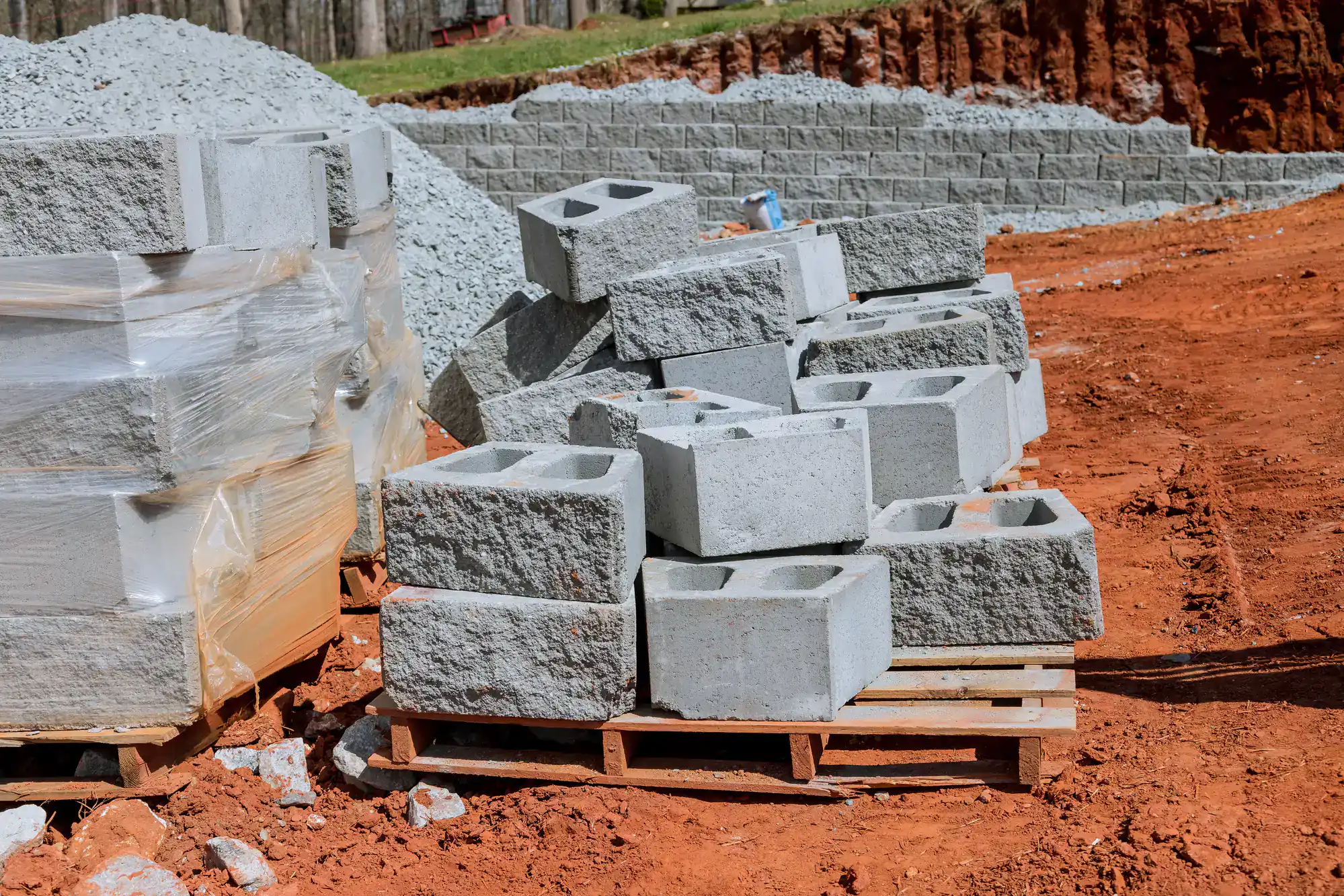
A stack of concrete cinder blocks is arranged on wooden pallets at a construction site with red soil and gravel. Wrapped blocks and a partially built stone retaining wall are visible in the background.

How deep do retaining walls need to be in Amityville?

Retaining walls in Amityville need excavation 8-10 inches deep minimum, with foundations reaching 30-36 inches below ground to get below the frost line. This prevents frost heave that destroys walls within a few winter cycles. Long Island’s sandy soil drains well but shifts easily, so proper depth and base preparation are critical. We excavate deeper than many contractors because we’ve seen what happens when corners get cut. The extra depth means your wall stays stable through decades of freeze-thaw cycles. Shallow foundations are the number one cause of retaining wall failure in our area. The upfront cost of proper excavation is nothing compared to rebuilding a failed wall in five years.
Every retaining wall needs drainage systems to prevent hydrostatic pressure buildup behind the wall. In Amityville, this means perforated pipes at the base, gravel backfill, and weep holes positioned to handle our water table and storm conditions. Poor drainage causes more retaining wall failures than any other factor. Water builds up behind the wall, creating pressure that causes bulging, cracking, or complete collapse. We’ve rebuilt dozens of walls that failed because the original contractor skipped proper drainage. We install French drains, use geotextile fabric to prevent soil migration, and slope everything away from your foundation. The drainage system gets as much attention as the wall itself because it’s what keeps your wall standing long-term.
Properly built stone retaining walls last 50-200 years in coastal areas when constructed with the right materials and drainage systems. The key is using materials designed for salt air exposure and building drainage that handles Long Island’s unique conditions. Many walls fail within 10-15 years because contractors use materials not rated for coastal conditions or skip proper drainage installation. Salt air accelerates corrosion, and our freeze-thaw cycles stress improperly built walls until they fail. We use manufacturer-certified materials rated for coastal exposure and build drainage systems that prevent the hydrostatic pressure that destroys walls. Your investment should last generations, not need rebuilding every decade.
Walls over 3-4 feet typically require permits in Amityville and throughout Nassau County. The permit process involves engineering review and inspections at multiple construction phases, which is why working with licensed contractors familiar with local requirements matters. Permit costs run $50-450 depending on wall height and complexity. The bigger cost is delays if your contractor doesn’t understand local building codes or inspection requirements. We handle all permit applications and coordinate inspections. Some homeowners try to avoid permits by building multiple shorter walls, but this often creates more problems than it solves. Proper permitting protects you legally and ensures your wall meets structural requirements for Long Island conditions.
Segmental block walls use interlocking concrete units that step back into the soil for stability. They’re ideal for Amityville’s sandy soil because they flex with ground movement and offer excellent drainage. Poured concrete walls are solid barriers that can crack under pressure. Segmental walls dominate Long Island installations because they handle our soil conditions better. They’re easier to repair if damage occurs and don’t require the extensive footings that poured concrete demands. The interlocking design distributes pressure more evenly. Poured concrete works for certain applications, but segmental block systems from manufacturers like Cambridge and Unilock are engineered specifically for residential applications in our soil conditions. They offer better long-term performance with less maintenance.
Retaining wall costs in Amityville typically range from $15-50 per square foot depending on materials, height, and site conditions. Most residential projects fall between $3,000-12,000 including proper drainage and site preparation. Height dramatically affects cost because walls over 4 feet require engineering, permits, and more complex installation. Difficult access, poor soil conditions, or extensive drainage needs can increase costs. We provide detailed estimates that break down all components. The cheapest bid usually means shortcuts on drainage, foundation depth, or materials. Those walls fail within years, costing far more to rebuild than investing in proper construction initially. Quality installation costs more upfront but saves money long-term.