Retaining Wall Contractor East Moriches

Stop Soil Erosion Before It Costs Thousands

Professional retaining wall installation that handles East Moriches’ sandy soil and coastal drainage challenges the right way.
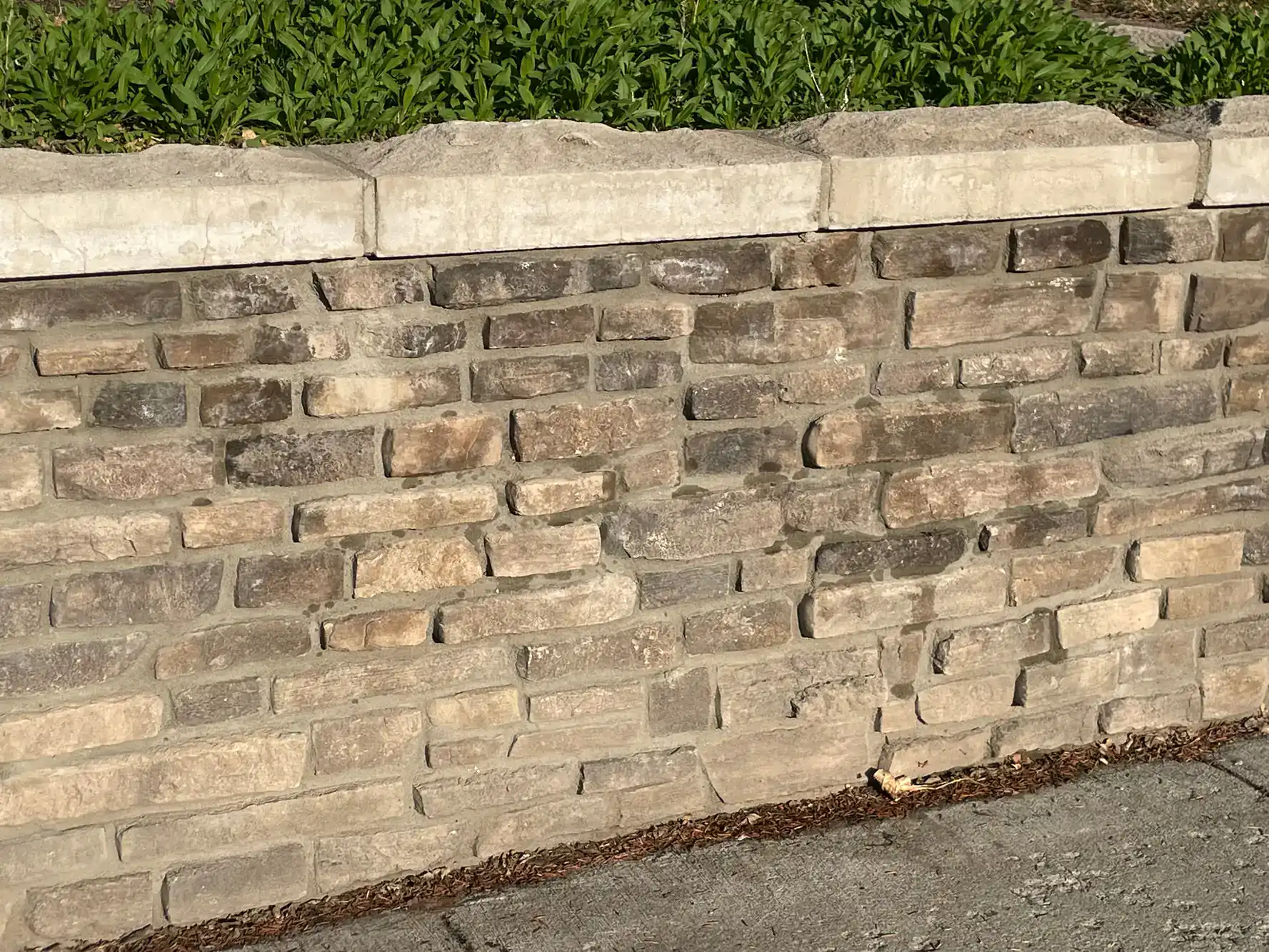
A stone retaining wall made of rectangular, tan and brown bricks supports a raised bed with green plants. Sunlight casts shadows on the textured wall and gray sidewalk below.

Hear from Our Customers

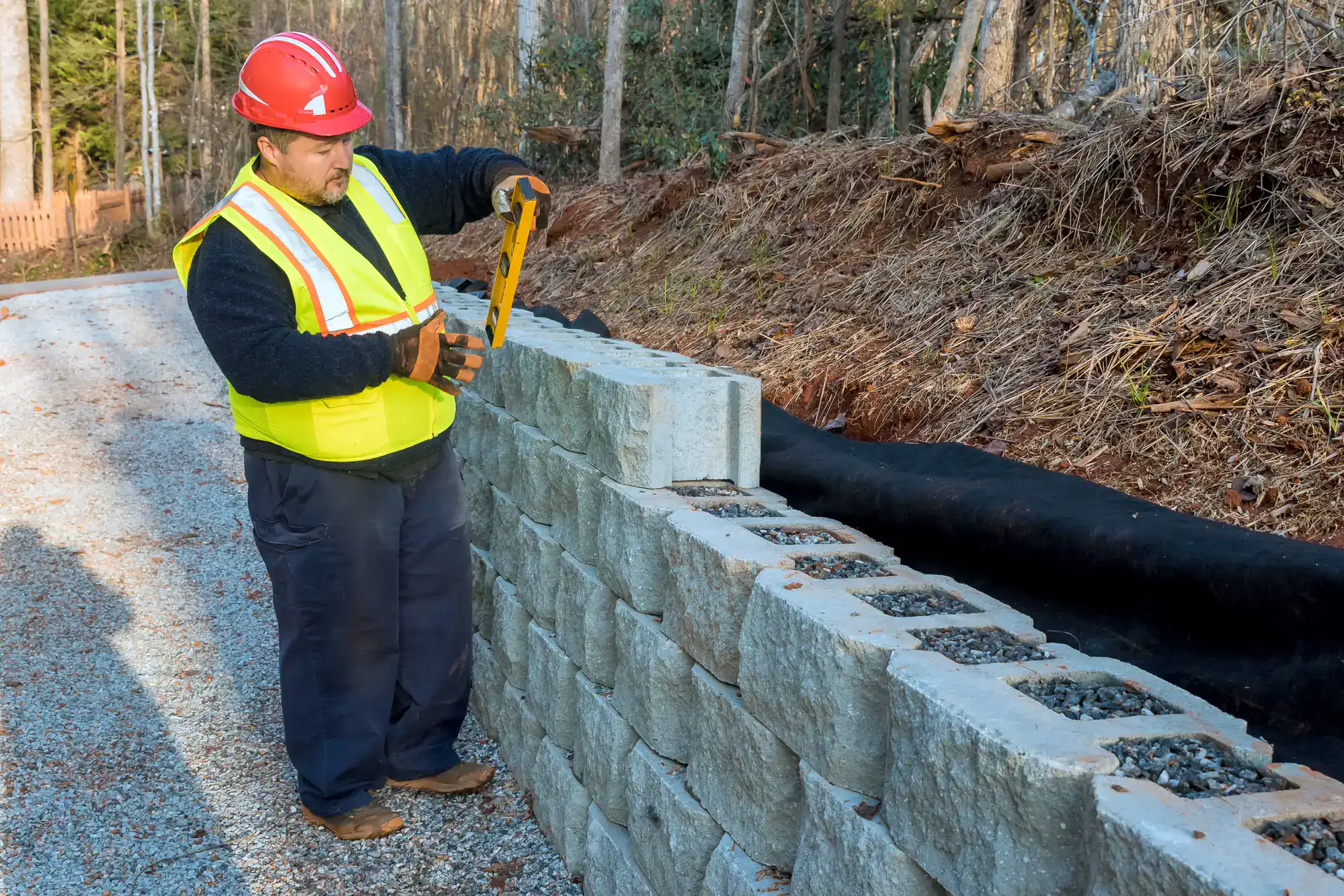
A construction worker in a yellow safety vest and red helmet uses a level to check concrete blocks while building a retaining wall next to a gravel road and a slope with trees.

Retaining Wall Installation East Moriches

Transform Slopes Into Usable Space
Your sloped yard doesn’t have to stay a problem. When we build your retaining wall, you get level areas perfect for patios, gardens, or just easier maintenance. No more watching topsoil wash away after every storm. East Moriches properties face unique challenges with sandy soil and coastal weather. Our walls are engineered specifically for these conditions, with proper drainage systems that prevent the water buildup that destroys most retaining walls. You’ll have usable outdoor space that actually adds value to your property instead of constantly fighting erosion and drainage issues that only get worse over time.

Stone Wall Installer East Moriches

Licensed Experts Who Know Long Island
We’ve been solving retaining wall challenges across Suffolk County, Nassau County, Southampton, and East Hampton for years. We’re not just another contractor – we’re Long Island specialists who understand exactly what coastal properties need. Owner Iain Traynor brings union masonry experience and stays involved in every project from estimate to completion. We’re certified installers for Cambridge, Techo-Bloc, Unilock, Nicolock, Eldorado, and Boral – the manufacturers that matter. Most of our work comes from referrals because we do what we say we’ll do, when we say we’ll do it. That’s how family businesses survive on Long Island.

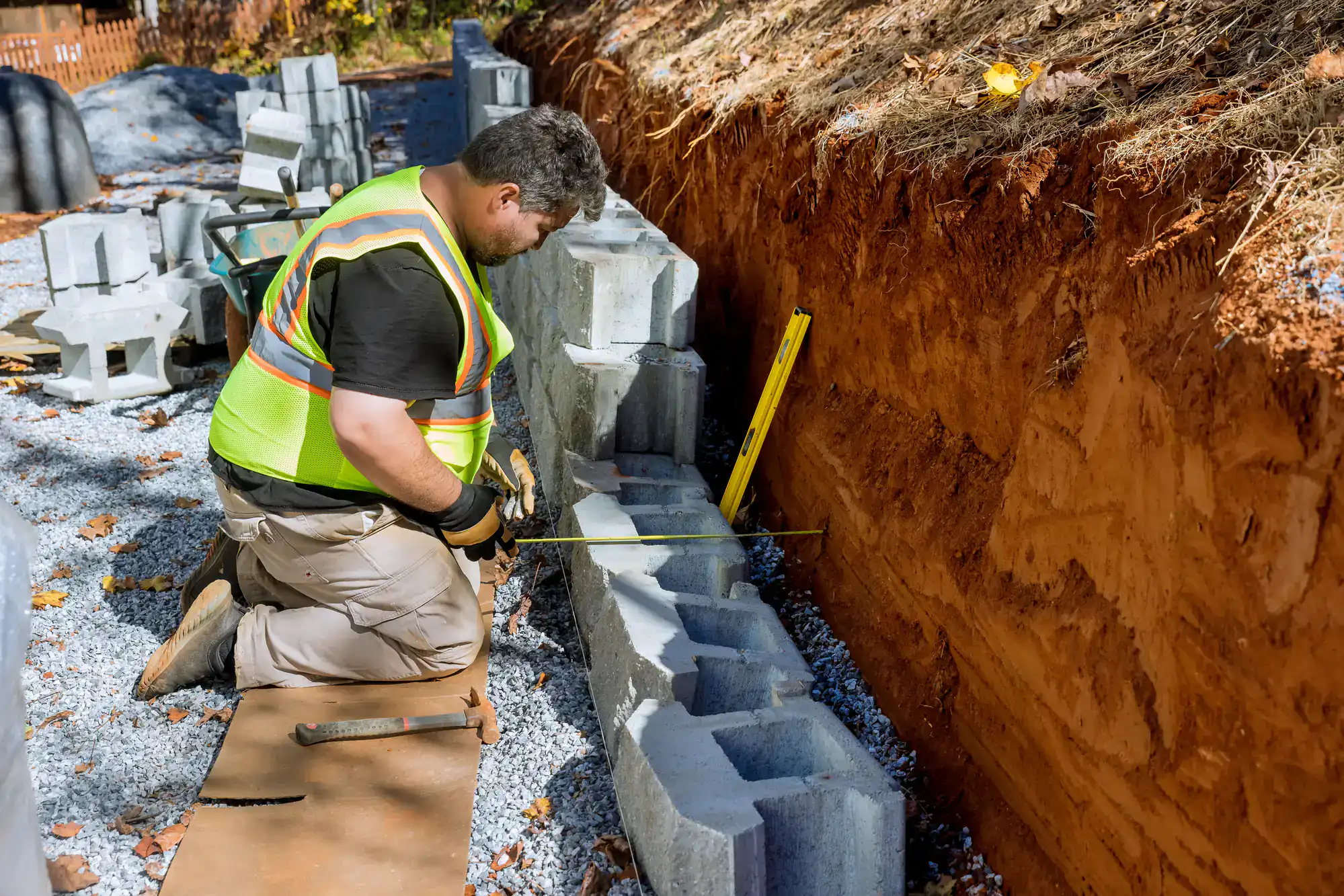
A construction worker in a safety vest kneels on gravel, measuring concrete blocks as he builds a retaining wall beside an exposed dirt slope. Tools and blocks are scattered around the worksite.

Retaining Wall Builder East Moriches

Built Right For Long Island Conditions
We start with a site evaluation to understand your specific soil conditions, drainage patterns, and grade requirements. East Moriches properties often have sandy soil and high water tables that require specialized approaches. Excavation goes 30-36 inches deep to get below the frost line – critical for preventing freeze-thaw damage that destroys walls. We install a proper crushed stone foundation with compaction that creates stable support for sandy soil conditions. The drainage system gets built in from the start, not added as an afterthought. This prevents water buildup behind the wall, which is the number one cause of retaining wall failure. We use gravel backfill, proper drainage pipes, and weep holes to manage water flow effectively.
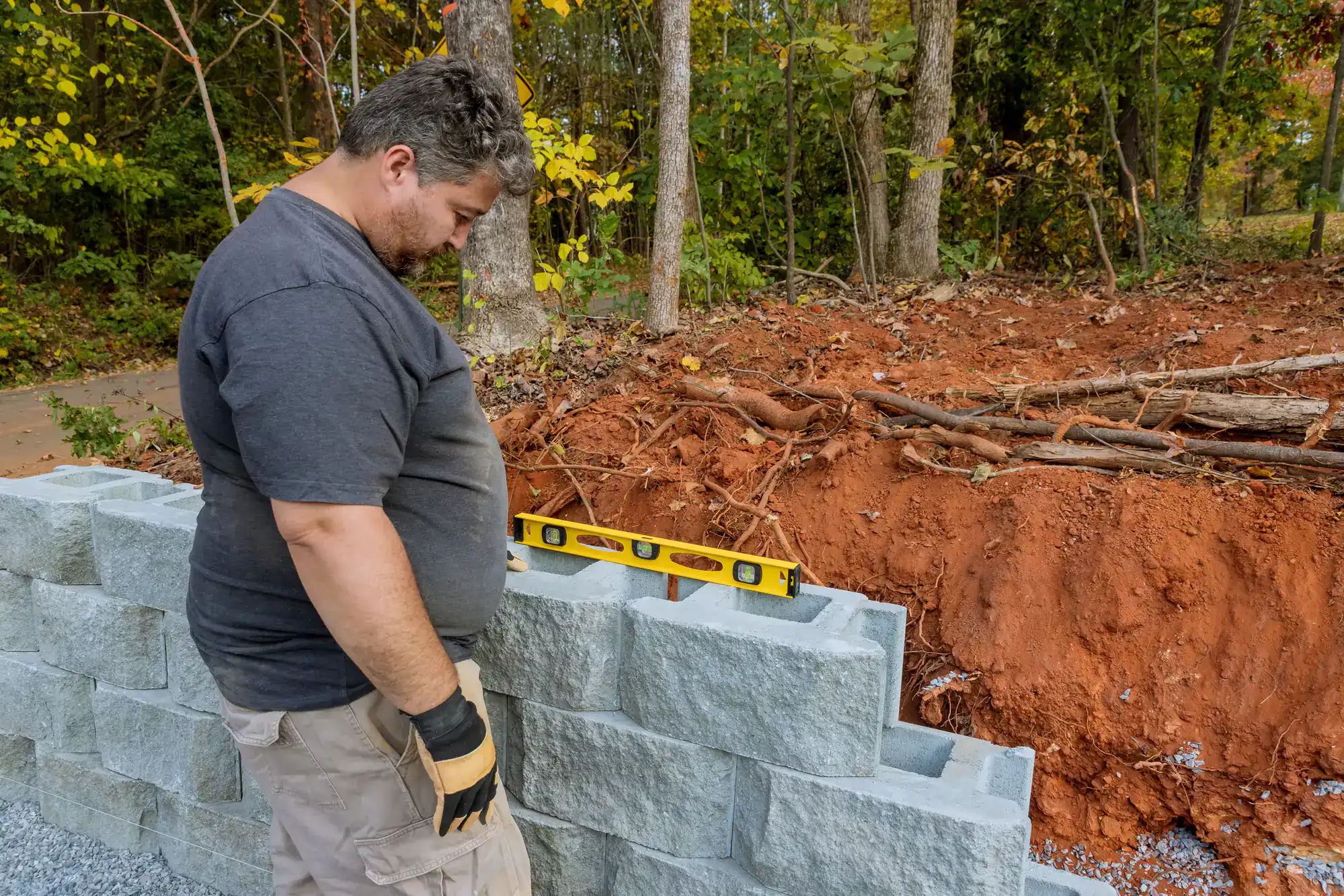
A man wearing gloves checks the level of a gray stone retaining wall with a yellow spirit level, next to a dirt embankment and forested area.

Ready to get started?

Explore More Services

About Stone Escapes Masonry & Outdoor Design

Get a Free Consultation

Retaining Wall Specialist East Moriches

What's Included In Professional Installation
Every retaining wall project includes site assessment, proper excavation to frost line depth, engineered drainage systems, and materials from certified manufacturers. We handle permits when required and ensure compliance with local building codes. East Moriches properties get special attention for coastal conditions – salt air exposure, storm surge considerations, and the sandy soil that requires deeper foundations than inland areas. We use corrosion-resistant materials and enhanced drainage designed for Long Island’s unique environment. You get direct communication with the owner throughout the project, not handed off to different crews or managers. Quality control stays consistent because the same team that estimates your project builds it and stands behind the work.
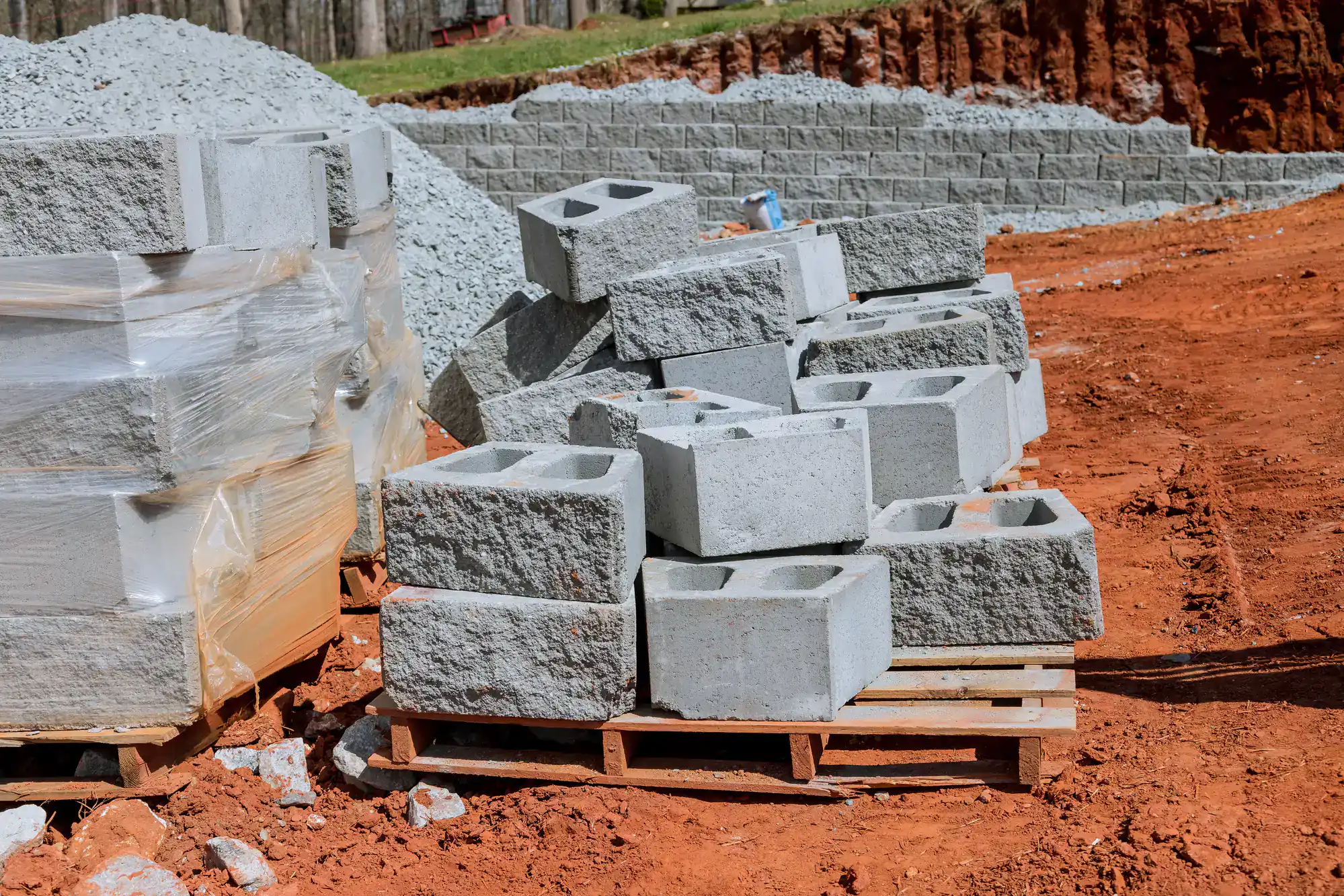
A stack of concrete cinder blocks is arranged on wooden pallets at a construction site with red soil and gravel. Wrapped blocks and a partially built stone retaining wall are visible in the background.

Why do retaining walls fail in East Moriches?

Poor drainage is the number one cause of retaining wall failure anywhere, but it’s especially critical in East Moriches because of the coastal conditions and sandy soil. When water builds up behind a wall with nowhere to go, it creates pressure that can crack, lean, or completely collapse the structure. Many contractors skip proper drainage to save money upfront, but that often means rebuilding the entire wall within a few years. We’ve seen homeowners spend thousands rebuilding walls that failed because the original contractor didn’t install adequate drainage systems. East Moriches also has freeze-thaw cycles that can heave walls if they’re not built below the frost line. The combination of water pressure and frost action is what destroys most retaining walls in our area.
In East Moriches, foundations need to go 30-36 inches deep to get below the frost line. This prevents frost heave during winter freeze-thaw cycles that can crack or shift the entire wall structure. Sandy soil conditions here also require deeper foundations than you’d need inland. The soil drains well, which is good, but it doesn’t provide as much lateral support, so proper foundation depth becomes even more critical for long-term stability. We excavate to the proper depth and install a compacted crushed stone base that creates stable support. Cutting corners on foundation depth is one of the most expensive mistakes you can make with a retaining wall project.
Segmental block walls using interlocking concrete systems work exceptionally well for East Moriches properties. They accommodate the slight movement that happens in sandy soil while maintaining structural integrity over time. We use materials from Cambridge, Techo-Bloc, Unilock, Nicolock, Eldorado, and Boral because they’re engineered for coastal conditions and come with proper warranties. These manufacturers design their systems specifically to handle salt air exposure and moisture that other materials can’t withstand. Natural stone is another excellent choice for Long Island, especially fieldstone and cut stone that complement traditional and coastal home styles. The key is using materials rated for our specific climate and soil conditions, not just whatever’s cheapest.
Professional segmental block wall installation typically runs $25-45 per square foot, depending on height, site access, and specific materials. Natural stone walls cost more but offer premium aesthetics and exceptional longevity. The total project cost depends on factors like excavation requirements, drainage complexity, and permit needs. Walls over 3-4 feet often require permits and engineering, which adds to the upfront cost but ensures safety and code compliance. Remember that proper installation and drainage are more important than material choice for longevity. Spending a little more upfront on correct construction methods saves thousands in potential rebuilding costs later.
Most municipalities require permits for retaining walls over 3-4 feet tall. In Suffolk County and Nassau County, permit requirements can vary by township, so we handle the research and applications to ensure compliance. Walls over 4 feet typically need structural engineering to ensure they can handle the soil pressure safely. Engineering fees range from $500-2000 depending on complexity, but they’re essential for preventing dangerous failures. We’re licensed in Suffolk County, Nassau County, Southampton, and East Hampton, so we understand the local requirements and handle permit applications as part of our service. This ensures your project meets all codes and passes inspections.
Well-built retaining walls can last 20-50 years or more with proper materials and installation. Segmental block walls and natural stone typically outlast wood or basic concrete options. The key factors for longevity are proper drainage, correct foundation depth, and using materials rated for coastal conditions. Most wall failures happen because of inadequate drainage or foundation issues, not material deterioration. Regular maintenance helps extend lifespan – clearing drainage systems, checking for cracks or shifting, and addressing small issues before they become major problems. We provide guidance on maintenance and offer repair services for walls we’ve installed.