Retaining Wall Contractor in Centerport

Walls Built Right the First Time

Your property deserves protection that lasts decades, not quick fixes that fail when you need them most.
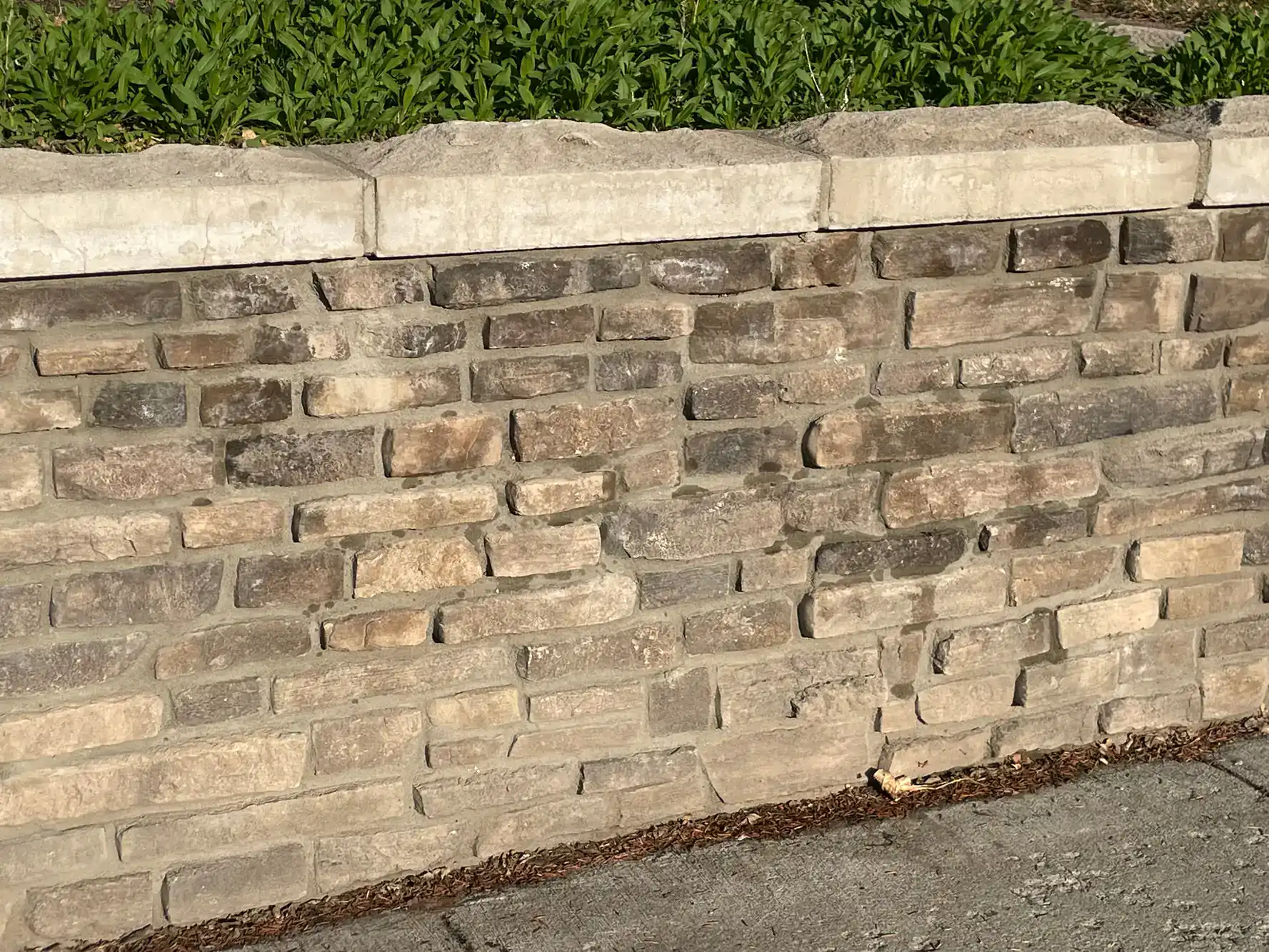
A stone retaining wall made of rectangular, tan and brown bricks supports a raised bed with green plants. Sunlight casts shadows on the textured wall and gray sidewalk below.

Hear from Our Customers

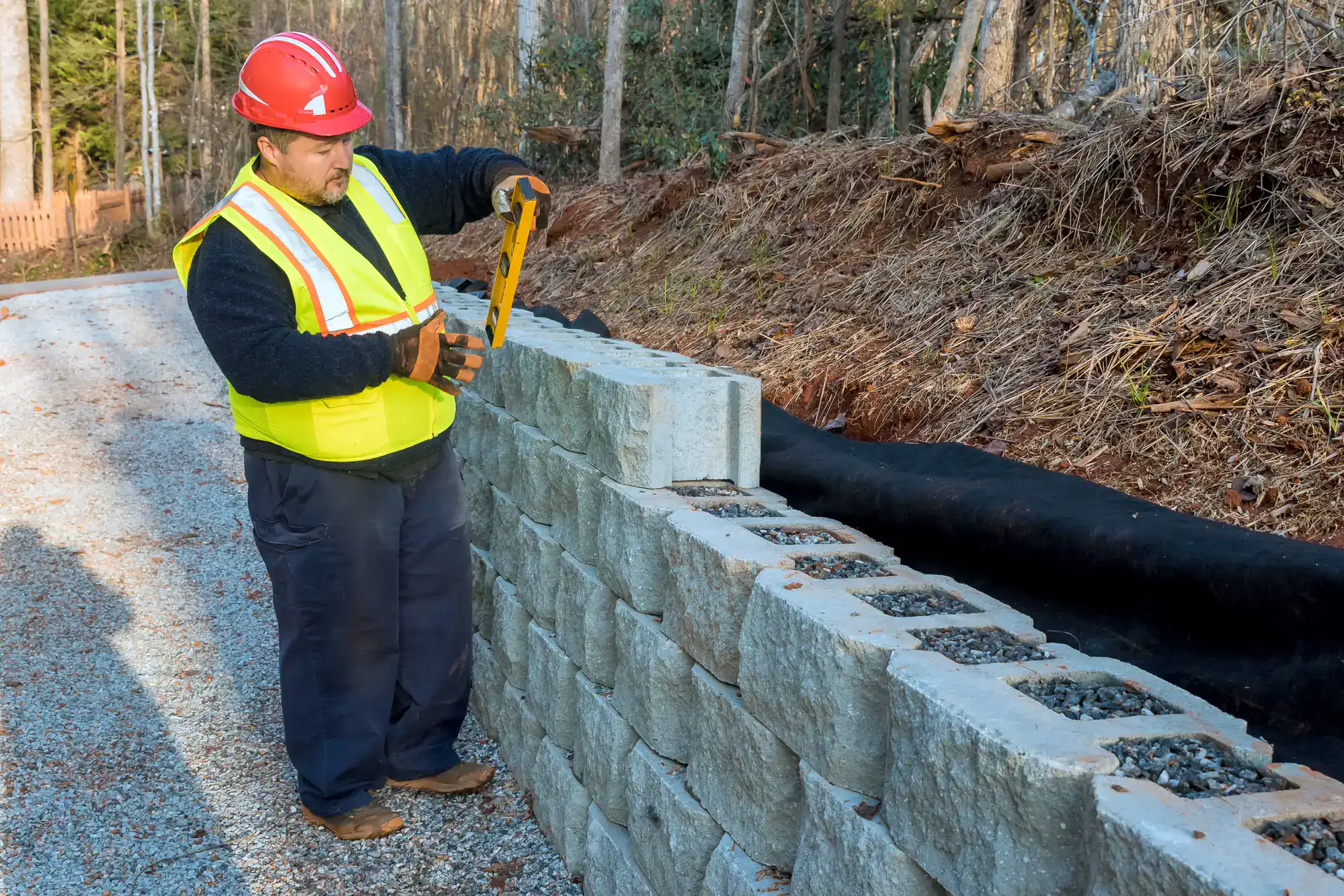
A construction worker in a yellow safety vest and red helmet uses a level to check concrete blocks while building a retaining wall next to a gravel road and a slope with trees.

Retaining Wall Installation Centerport NY

Stop Erosion Before It Costs You
You’re dealing with sloped terrain that’s washing away with every heavy rain. Your landscaping investment disappears, your foundation gets exposed, and your usable yard space shrinks every season. Professional retaining wall installation stops this cycle. You get stable soil that stays put, usable flat areas where slopes used to be, and proper water management that protects your entire property. No more watching your yard wash down the street. The right wall system turns problem slopes into functional outdoor space while protecting what you’ve already built.

Stone Wall Installer Centerport

Long Island Conditions Require Local Expertise
We’ve built retaining walls across Suffolk and Nassau Counties for over 15 years. Owner Iain Traynor brings union masonry experience and stays involved in every estimate, plan, and build. We’re licensed in Suffolk, Nassau, East Hampton, and Southampton because we understand what Long Island’s sandy soil, coastal moisture, and freeze-thaw cycles do to improperly built walls. Our standard preparation goes 8-10 inches deep with proper base layering and drainage planning designed specifically for local conditions. Centerport properties face unique challenges with elevation changes and water management. We’ve solved these problems hundreds of times with walls that work properly from day one.
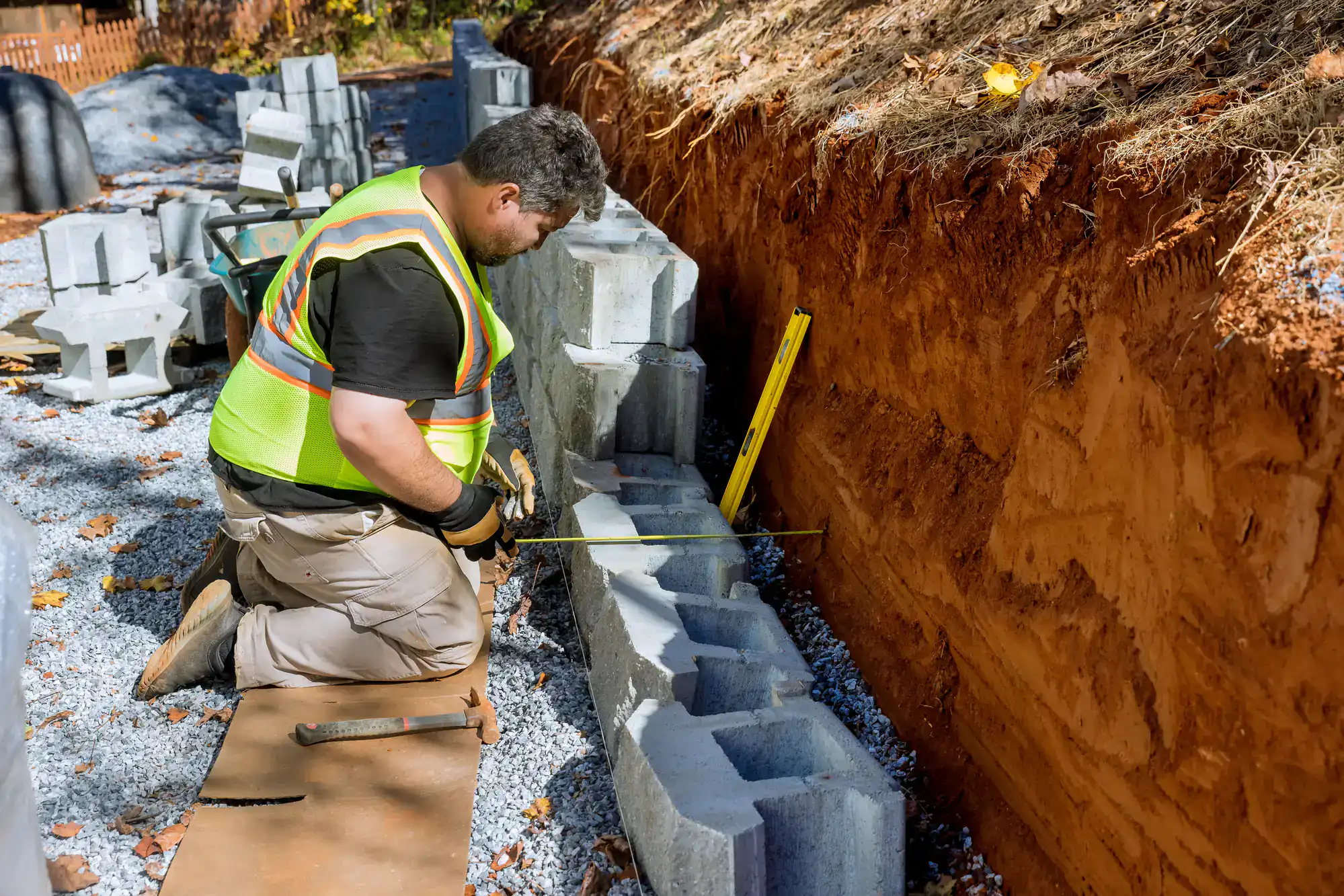
A construction worker in a safety vest kneels on gravel, measuring concrete blocks as he builds a retaining wall beside an exposed dirt slope. Tools and blocks are scattered around the worksite.

Retaining Wall Builder Near You

Built to Handle Long Island Weather
Every project starts with an in-person evaluation of your specific site conditions, soil type, and drainage patterns. We measure slopes, assess water flow, and plan the foundation depth needed to reach below Long Island’s 30-36 inch frost line. Excavation comes next, going deep enough to create stable footing in sandy soil. We install proper base materials with compaction, then build the drainage system that prevents water pressure buildup behind your wall. Wall construction uses materials rated for coastal conditions – stone, concrete blocks, or interlocking systems that resist salt air and freeze-thaw damage. Every course gets checked for level and proper alignment before we backfill with graded materials that promote drainage. The finished wall includes edge restraints and proper grading that directs water away from the structure, giving you a system designed to last decades in Long Island’s climate.
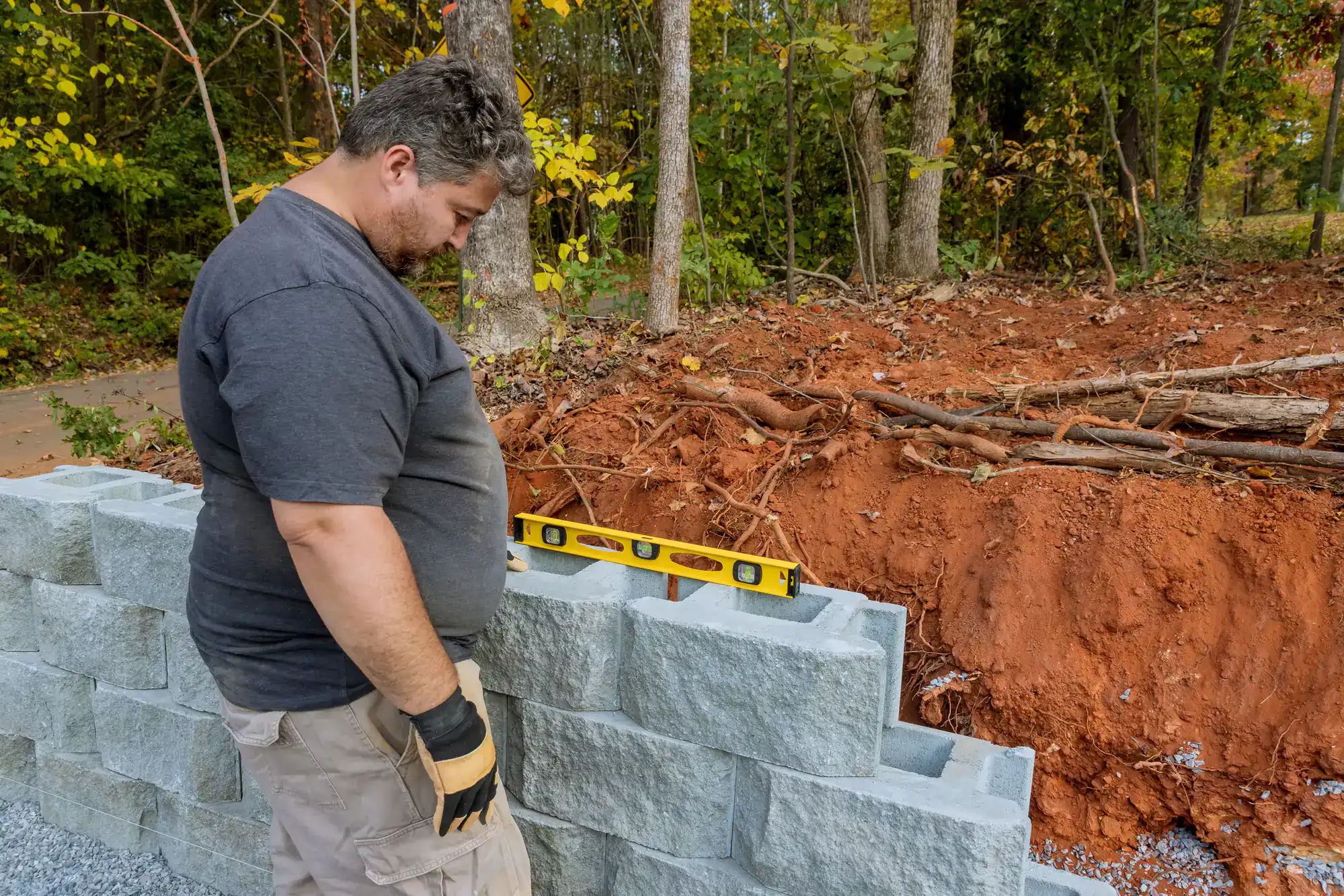
A man wearing gloves checks the level of a gray stone retaining wall with a yellow spirit level, next to a dirt embankment and forested area.

Ready to get started?

Explore More Services

About Stone Escapes Masonry & Outdoor Design

Get a Free Consultation

Retaining Wall Specialist Centerport

What Your Project Actually Includes
Your retaining wall project includes complete site preparation with excavation to proper depth, engineered base installation with compaction, and drainage systems designed for Long Island’s soil conditions. We handle permits when required and coordinate inspections. Materials come from certified manufacturers like Cambridge, Techo-Bloc, Unilock, Nicolock, Eldorado, and Boral. These aren’t generic blocks – they’re engineered systems designed to interlock properly and include built-in drainage features. Centerport properties often need walls that handle both structural loads and aesthetic requirements. We design each installation to manage your specific grade changes while creating clean lines that enhance your landscape rather than dominating it. Every project includes proper backfill materials, edge restraints, and surface grading that prevents water from pooling behind the wall. You get a complete system, not just stacked blocks.

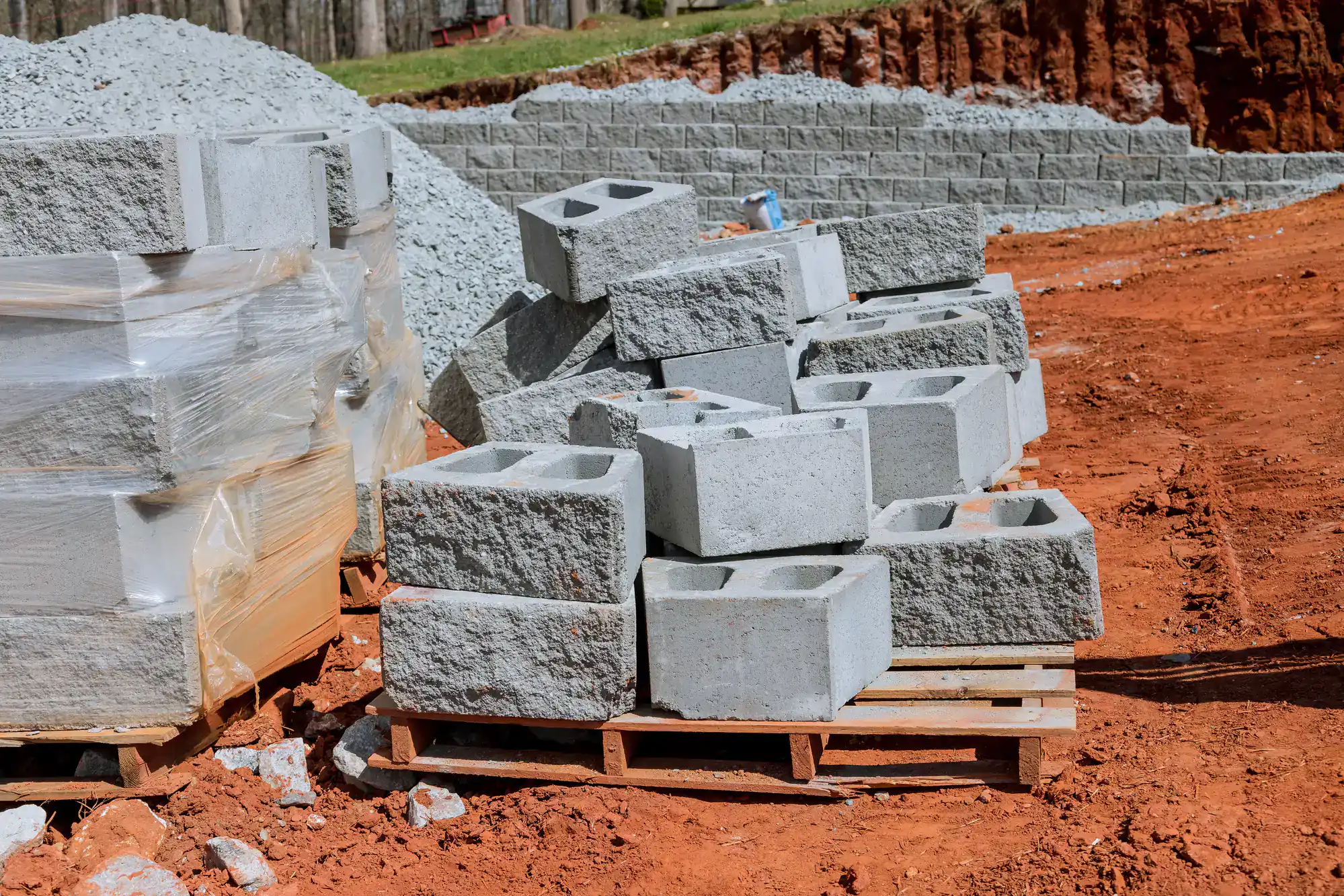
A stack of concrete cinder blocks is arranged on wooden pallets at a construction site with red soil and gravel. Wrapped blocks and a partially built stone retaining wall are visible in the background.

Do I need a permit for my retaining wall in Centerport?

Suffolk County municipalities require building permits for retaining walls over 4 feet in height. Centerport falls under Huntington Town jurisdiction, which has specific requirements for wall construction and setbacks. We handle permit applications when needed and ensure your wall meets local building codes. The permit process typically takes 2-3 weeks and requires engineered plans for taller walls or complex drainage situations. Even walls under 4 feet benefit from professional installation that follows code requirements. Proper foundation depth, drainage, and materials prevent problems that could require expensive repairs later.
Long Island’s frost line requires foundations 30-36 inches deep to prevent frost heave damage. Centerport’s sandy soil conditions often need additional depth for proper stability, especially on sloped sites. We excavate based on your specific soil conditions and wall height. Taller walls need deeper foundations, and areas with poor drainage require additional base preparation with engineered materials. The foundation includes compacted gravel base, proper drainage installation, and materials rated for coastal exposure. Skipping proper foundation depth is the fastest way to end up with a failed wall that needs complete rebuilding.
Natural stone, concrete blocks, and interlocking concrete systems perform best in Nassau and Suffolk County conditions. These materials resist freeze-thaw cycles and salt air exposure that destroy cheaper alternatives. We avoid pressure-treated wood for structural walls because Long Island’s moisture levels cause rot and insect damage. Concrete-based materials maintain their structural integrity for decades with minimal maintenance. Material selection depends on your wall height, soil conditions, and aesthetic preferences. We’ll recommend the most cost-effective option that meets your site’s structural requirements and design goals.
Most residential retaining walls take 3-5 days from excavation to completion, depending on wall height, length, and site conditions. Complex drainage situations or permit requirements can add time to the schedule. Weather affects the timeline since we can’t pour concrete or compact materials in rain or freezing conditions. We schedule projects during optimal weather windows and communicate any delays immediately. Preparation work often takes longer than the actual wall construction. Proper excavation, base installation, and drainage systems require time to do correctly, but this upfront investment prevents problems that plague rushed installations.
Poor drainage causes most retaining wall failures on Long Island. Without proper backfill and drainage systems, water pressure builds up behind the wall and pushes it outward or causes cracking. Inadequate foundation depth leads to frost heave damage during winter freeze-thaw cycles. Walls that aren’t excavated below the frost line shift and crack as ground conditions change seasonally. Using inappropriate materials for coastal conditions results in premature deterioration. Salt air, moisture, and temperature swings destroy walls built with materials not rated for Long Island’s environment.
Retaining wall costs in Centerport typically range from $25-50 per square foot depending on materials, height, and site conditions. Complex drainage requirements or difficult access can increase costs. The investment includes proper excavation, engineered materials, drainage installation, and professional construction that meets local building codes. Cheaper installations often fail within a few years, requiring complete rebuilding. We provide detailed estimates after evaluating your specific site conditions. Every property has unique challenges that affect material requirements and construction complexity, so accurate pricing requires an on-site assessment.