Retaining Wall Contractor in Lake Ronkonkoma, NY

Walls That Actually Hold Up

Long Island’s soil and weather destroy poorly built walls. We build retaining wall contractor solutions in Lake Ronkonkoma, NY that handle your property’s specific challenges.
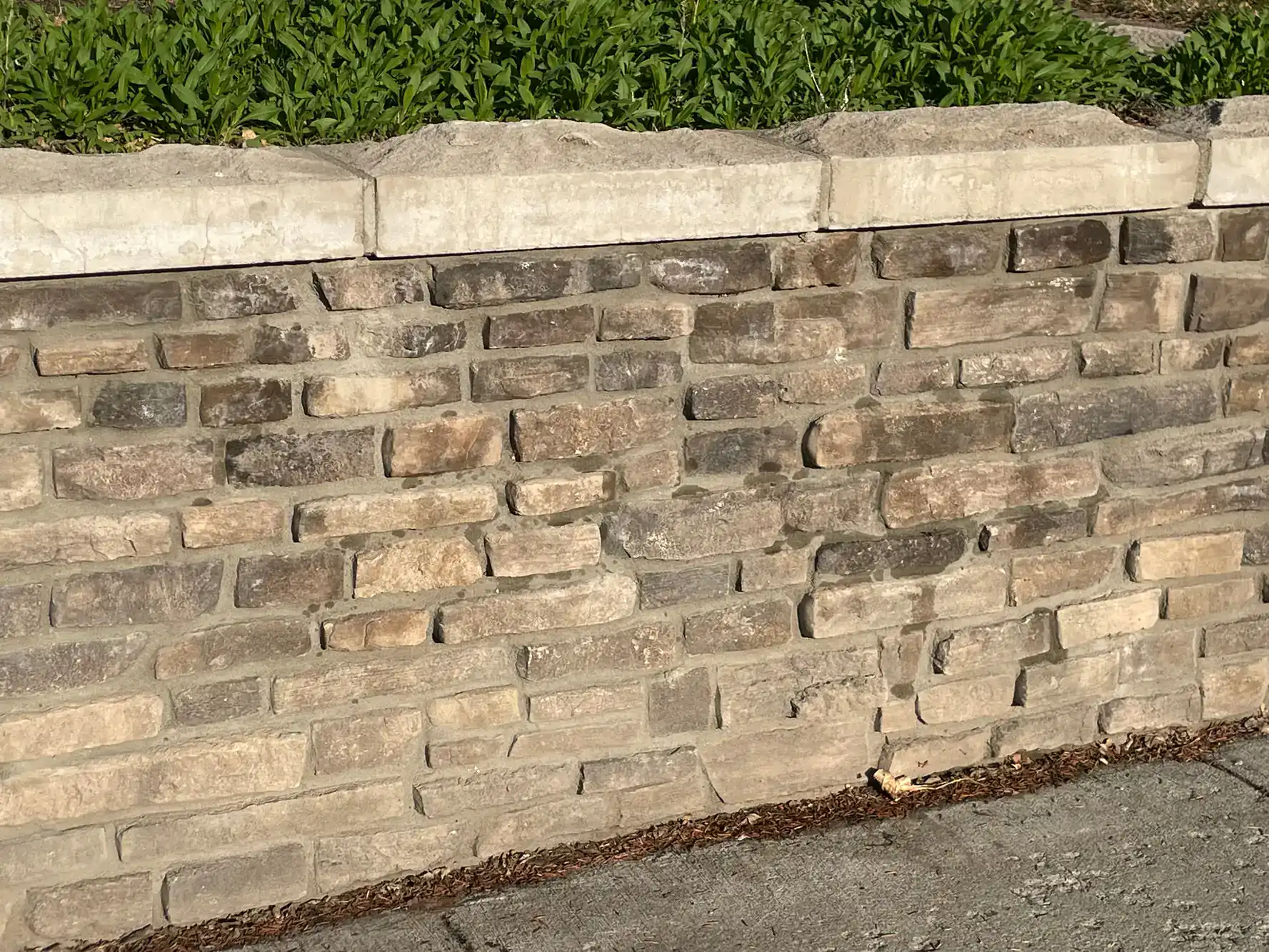
A stone retaining wall made of rectangular, tan and brown bricks supports a raised bed with green plants. Sunlight casts shadows on the textured wall and gray sidewalk below.

Hear from Our Customers

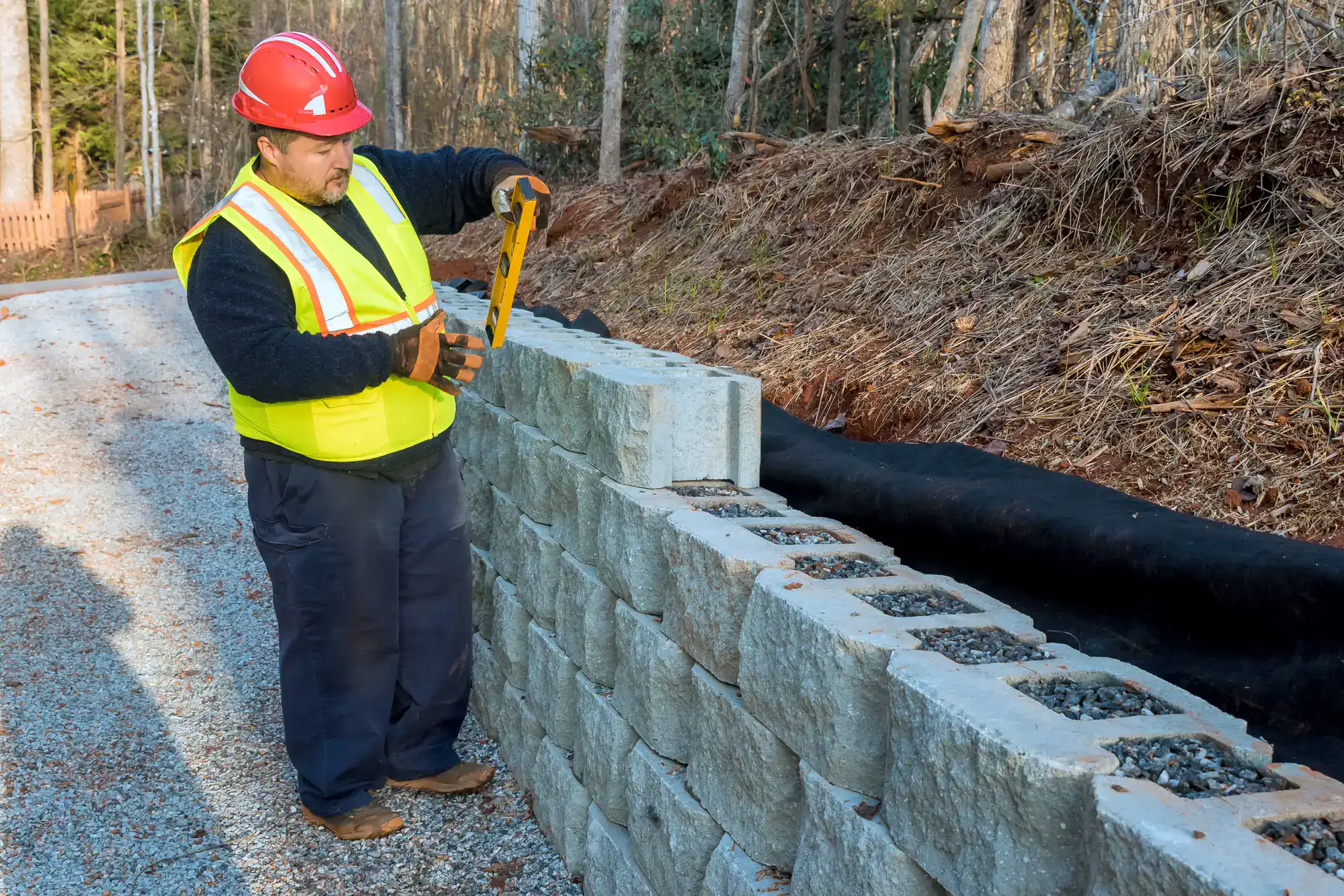
A construction worker in a yellow safety vest and red helmet uses a level to check concrete blocks while building a retaining wall next to a gravel road and a slope with trees.

Retaining Wall Installation Lake Ronkonkoma, NY

Your Property Protected for Decades
You get a wall that works. No more watching soil wash away during storms or dealing with drainage nightmares in your yard. Our retaining wall installation in Lake Ronkonkoma, NY addresses the real problems: sandy soil that shifts, coastal moisture that destroys materials, and freeze-thaw cycles that crack foundations. You’re investing in a solution that prevents the headaches other contractors leave behind. When we’re done, you have usable space where slopes used to be. Your landscaping stays put. Water flows where it should instead of pooling against your foundation.

Stone Wall Installer Lake Ronkonkoma, NY

We Know Long Island's Challenges
Stone Escapes has built retaining walls across Lake Ronkonkoma for over 15 years. We’re licensed in Suffolk County and certified by Cambridge, Techo-Bloc, Unilock, and other top manufacturers. Owner Iain Traynor handles your estimate personally. He’s got union masonry experience and stays involved from planning through completion. No handoffs to junior crews who don’t understand your project. We’ve seen what happens when contractors cut corners on Long Island projects. That’s why we excavate to proper depth, install real drainage systems, and use materials that handle coastal conditions.
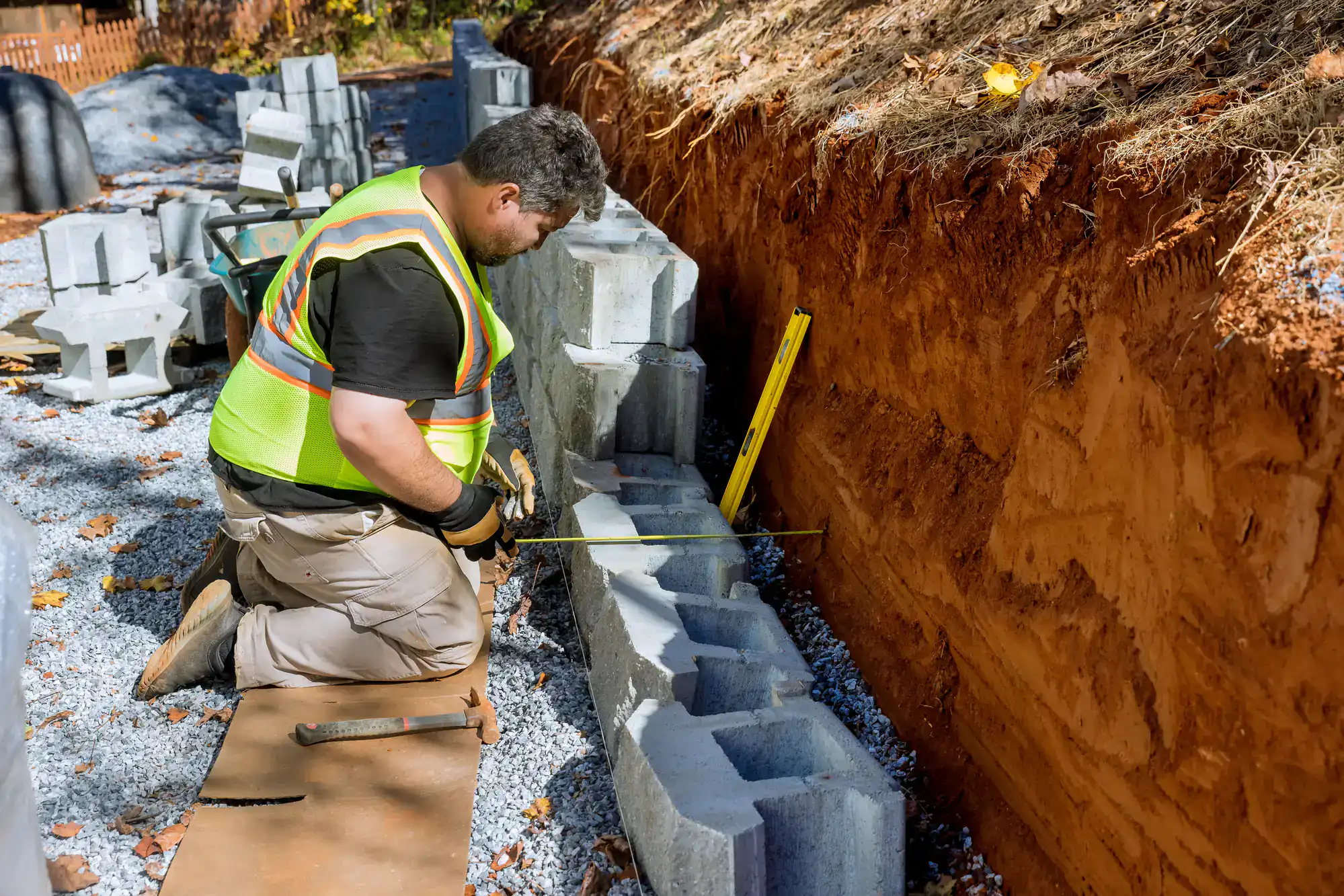
A construction worker in a safety vest kneels on gravel, measuring concrete blocks as he builds a retaining wall beside an exposed dirt slope. Tools and blocks are scattered around the worksite.

Retaining Wall Builder Lake Ronkonkoma, NY

How We Build Walls That Last
First, we evaluate your soil conditions and drainage patterns. Long Island properties need specific approaches—cookie-cutter solutions fail here. Next, we excavate 30-36 inches deep, below the frost line. Most contractors skip this step. We don’t. Proper foundation depth prevents the heaving and cracking you see on cheaper jobs. Then we install crushed stone base with proper compaction and build drainage systems that actually work. Perforated pipes, gravel backfill, and weep holes channel water away from your wall instead of letting it build pressure. Finally, we install your chosen materials using manufacturer-certified techniques. Whether it’s natural stone, concrete block, or interlocking systems, you get installation that matches the engineering.
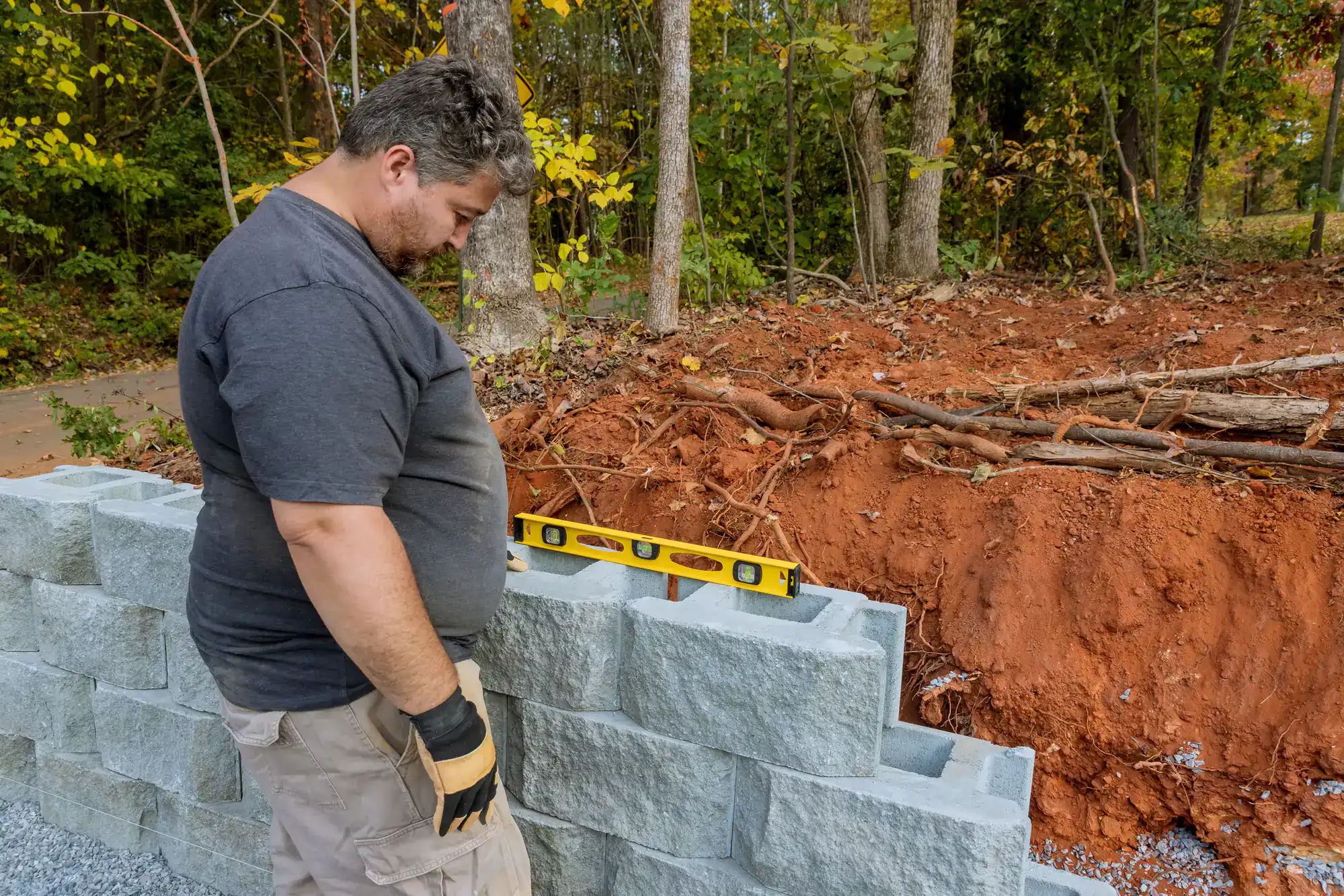
A man wearing gloves checks the level of a gray stone retaining wall with a yellow spirit level, next to a dirt embankment and forested area.

Ready to get started?

Explore More Services

About Stone Escapes Masonry & Outdoor Design

Get a Free Consultation

Retaining Wall Specialist Lake Ronkonkoma, NY

Built for Lake Ronkonkoma Conditions
Your retaining wall needs to handle Lake Ronkonkoma’s specific challenges. Sandy soil that doesn’t provide stable support. Coastal moisture that corrodes materials. Freeze-thaw cycles that crack foundations. We use enhanced drainage systems and corrosion-resistant materials designed for Long Island’s coastal climate. Salt air exposure and storm surge considerations are built into every project specification. Our standard preparation includes excavation to proper depth, base layering with crushed stone, drainage planning that prevents hydrostatic pressure buildup, and edge restraint installation that reduces shifting over time. These aren’t optional extras—they’re requirements for walls that perform reliably for decades.
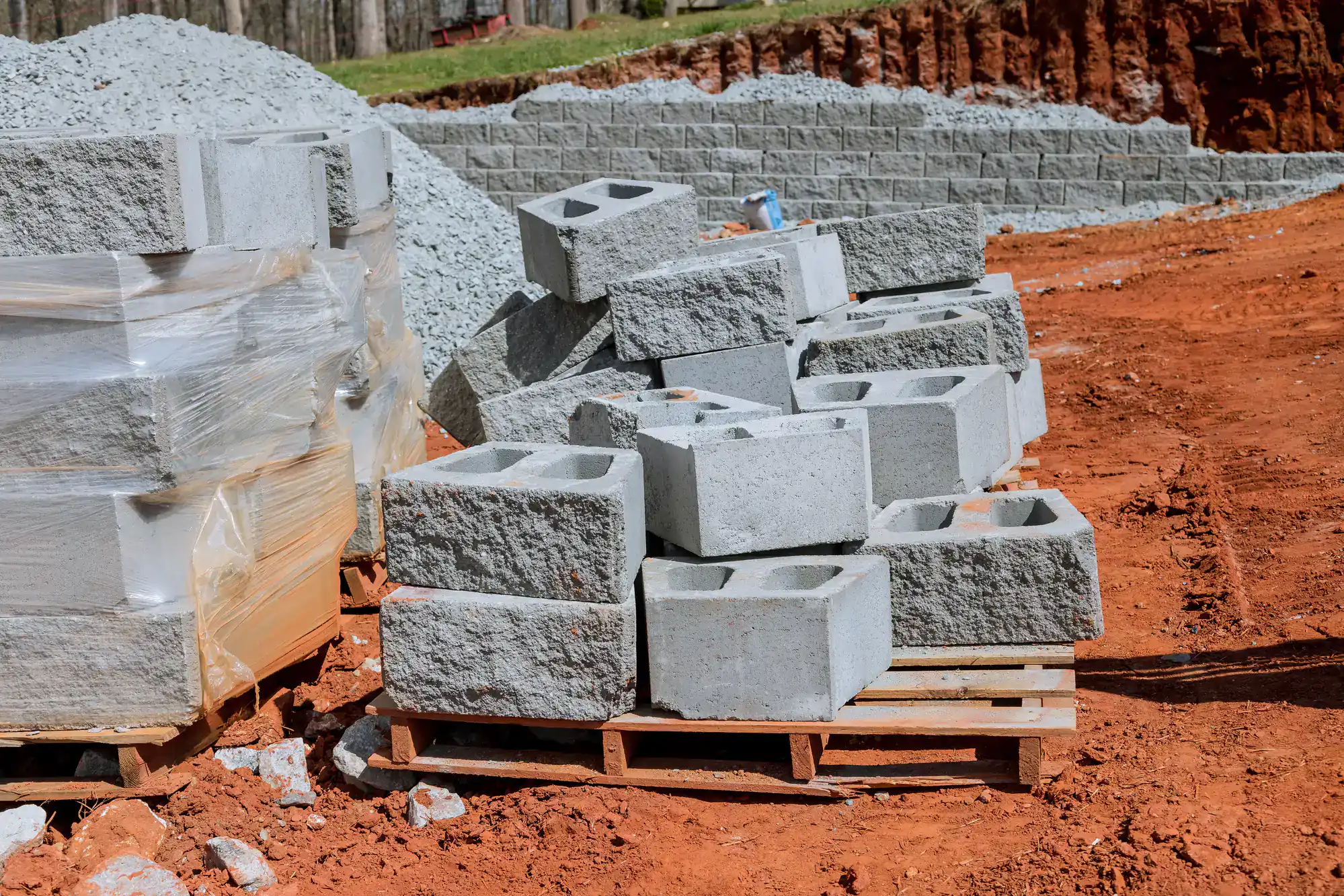
A stack of concrete cinder blocks is arranged on wooden pallets at a construction site with red soil and gravel. Wrapped blocks and a partially built stone retaining wall are visible in the background.

How deep should retaining wall foundations be in Lake Ronkonkoma?

Retaining wall foundations in Lake Ronkonkoma need to go 30-36 inches deep, below the frost line. This prevents frost heave during winter freeze-thaw cycles that destroy shallow foundations. Many contractors skip proper depth to save time and money. You end up with walls that shift, crack, or lean within a few years. We excavate to proper depth every time because foundation problems can’t be fixed with surface repairs. The extra depth also provides better stability in Long Island’s sandy soil conditions. Shallow foundations don’t have enough bearing capacity to resist the lateral pressure from retained soil, especially when water saturates the backfill area.
Effective drainage for coastal retaining walls requires multiple components working together. Perforated drainage pipes behind the wall collect water and channel it away from the foundation. Gravel backfill allows water to flow freely instead of building hydrostatic pressure. Weep holes at the base provide additional drainage outlets, preventing water buildup that causes walls to bulge or collapse. Geotextile fabric separates soil from gravel, maintaining drainage efficiency over time. Without proper drainage, water pressure builds behind your wall until something gives. We’ve seen expensive failures from contractors who skip drainage systems or install them incorrectly. The coastal climate makes proper water management even more critical than inland areas.
Long Island’s coastal environment requires materials that resist salt air corrosion and moisture penetration. Natural stone performs well because it’s naturally weather-resistant and doesn’t degrade from salt exposure like some manufactured materials. Concrete blocks work when properly sealed and designed for coastal applications. Interlocking systems from manufacturers like Cambridge and Techo-Bloc include built-in drainage features and corrosion-resistant components. Wood materials like railroad ties deteriorate quickly in Long Island’s damp climate and aren’t suitable for permanent installations. Steel components need special coatings to prevent rust from salt air. We recommend materials based on your specific site conditions and expected lifespan requirements.
Retaining wall costs in Lake Ronkonkoma typically range from $3,500 to $9,400 for most residential projects, depending on height, length, materials, and site conditions. Proper installation with adequate drainage and foundation depth costs more upfront but prevents expensive failures later. Factors affecting cost include excavation requirements, drainage system complexity, material choice, and accessibility. Walls over 4 feet require permits and often need engineered designs, adding to project costs. Cheap installations that skip proper foundation depth or drainage systems cost less initially but often require complete rebuilding within 5-10 years. We provide detailed estimates that include all necessary components for long-term performance, so you understand exactly what you’re getting.

Most retaining walls over 3-4 feet tall require permits in Lake Ronkonkoma and Suffolk County. Permit costs typically range from $50 to $450, depending on wall height and complexity. The permit process ensures your wall meets local building codes and safety requirements. Structural walls that retain significant amounts of soil often need engineered designs, even if they’re under the permit height threshold. This is especially important in Long Island’s sandy soil conditions where stability calculations are critical. We handle permit applications and inspections as part of our service. Trying to skip permits can result in fines and forced removal of completed work. It’s better to do it right from the start than deal with compliance issues later.
Properly constructed retaining walls in Lake Ronkonkoma should last 50-100 years with minimal maintenance, depending on materials and installation quality. Natural stone walls often outlast concrete block systems, but both perform well when built correctly. The key factors for longevity are proper foundation depth, effective drainage systems, and materials suited to coastal conditions. Walls that skip these fundamentals typically fail within 10-20 years, requiring expensive rebuilding. Regular maintenance includes clearing drainage outlets, inspecting for settling or movement, and addressing minor issues before they become major problems. We provide maintenance recommendations specific to your wall type and site conditions to maximize lifespan and performance.