
Hear from Our Customers
Your sloped yard stops being a headache and becomes an asset. No more watching soil wash away after every storm or dealing with standing water near your foundation.
You get level, usable space where there used to be erosion problems. Your property value increases while your maintenance headaches disappear.
The drainage issues that kept you up during heavy rains? Gone. Your investment is protected, and you can actually use that space for gardens, patios, or whatever you’ve been planning.
We’ve been handling Long Island’s unique construction challenges since our early recognition in Cambridge Pavingstone publications. Owner Iain Traynor brings union masonry and carpentry experience to every project.
We’re licensed across Suffolk County, Nassau County, and multiple Long Island townships because we know how different each area’s soil and drainage requirements can be. Hauppauge’s “overflowed land” history means water management isn’t optional—it’s essential.
Our certifications with Cambridge, Techo‑Bloc, Unilock, Nicolock, Eldorado, and Boral mean we use proven materials designed for coastal conditions. You’re not getting experimental approaches on your property.
We start with an in-person assessment because every Long Island property has different drainage patterns and soil conditions. No cookie-cutter estimates.
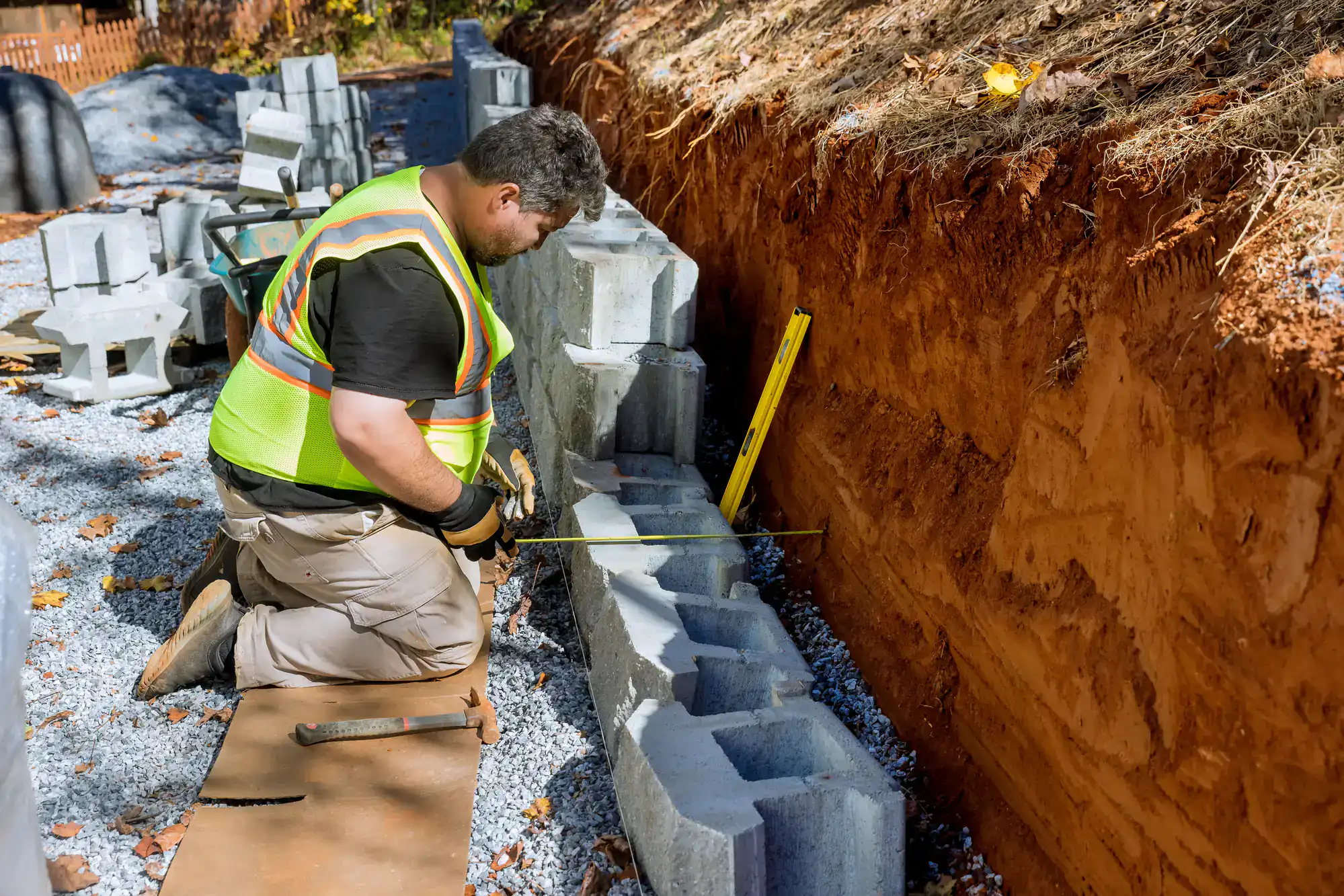
Excavation goes 8-10 inches deep with proper base layering designed for sandy soil movement. We’re digging below the frost line—typically 30-36 inches in this area—because freeze-thaw cycles will destroy shortcuts.
Drainage planning happens during construction, not as an afterthought. Filter fabric, proper stone backfill, and exit spouts get installed at the right heights to handle Long Island’s storm patterns.
Edge restraint installation prevents the shifting and cracking that kill most retaining walls within five years. We’re building for decades, not seasons.
Ready to get started?
We use manufacturer-certified materials specifically chosen for Long Island’s coastal moisture, salt air, and freeze-thaw cycles. Not every stone or block system works here.
Your retaining wall gets proper foundation preparation with crushed stone base material and compaction designed for sandy soil characteristics. The drainage system includes perforated pipe, clean backfill stone, and filter fabric to prevent soil migration.
Hauppauge’s springs and streams create unique water management challenges that generic contractors miss. We plan for seasonal water level fluctuations and the high water tables common in coastal areas.
Each project includes direct oversight from consistent crews who understand the specific requirements of Long Island construction codes and soil conditions.
In Hauppauge and throughout Long Island, retaining wall foundations typically need to go 30-36 inches deep to reach below the frost line. This prevents frost heave that can cause wall failure over time.
Long Island’s sandy soil composition requires deeper foundations than inland areas because the soil shifts more easily. We excavate to the proper depth and install crushed stone base material with proper compaction to create stable foundation support.
The exact depth depends on your specific soil conditions and wall height, but cutting corners on foundation depth is the fastest way to end up rebuilding your wall in a few years.
Poor drainage is the biggest killer of retaining walls in our area. When water from rain or snowmelt soaks the soil behind your wall and has no escape route, it creates immense hydrostatic pressure that can push the wall over.
Long Island’s sandy soil drains quickly but also shifts easily, especially during nor’easters and hurricanes that can saturate slopes. Without proper drainage systems like French drains or weep holes, even well-built walls fail.
Many contractors also don’t account for our coastal conditions—salt air exposure, high water tables, and seasonal water level fluctuations. They use materials and techniques that work inland but fail here within a few years.
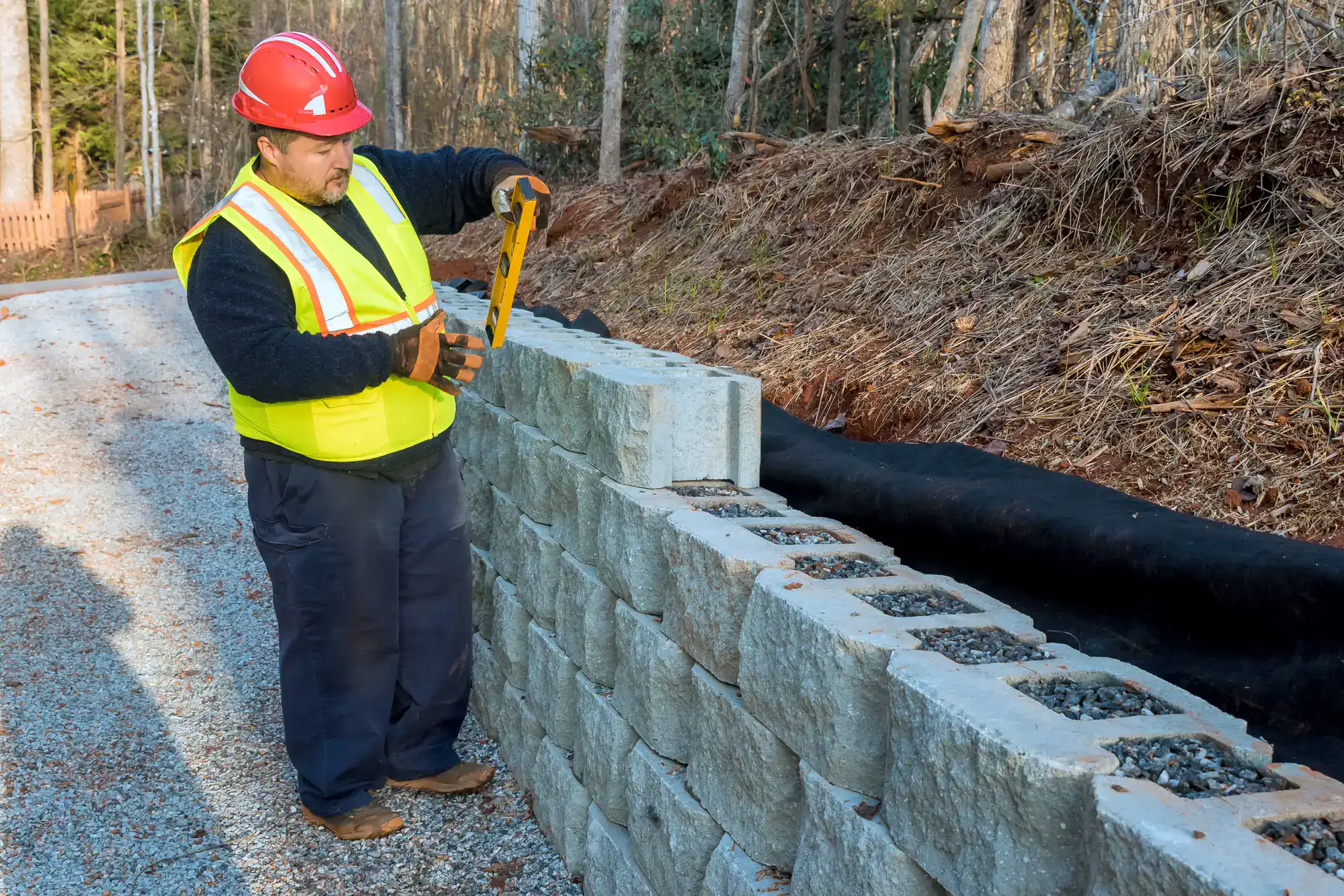
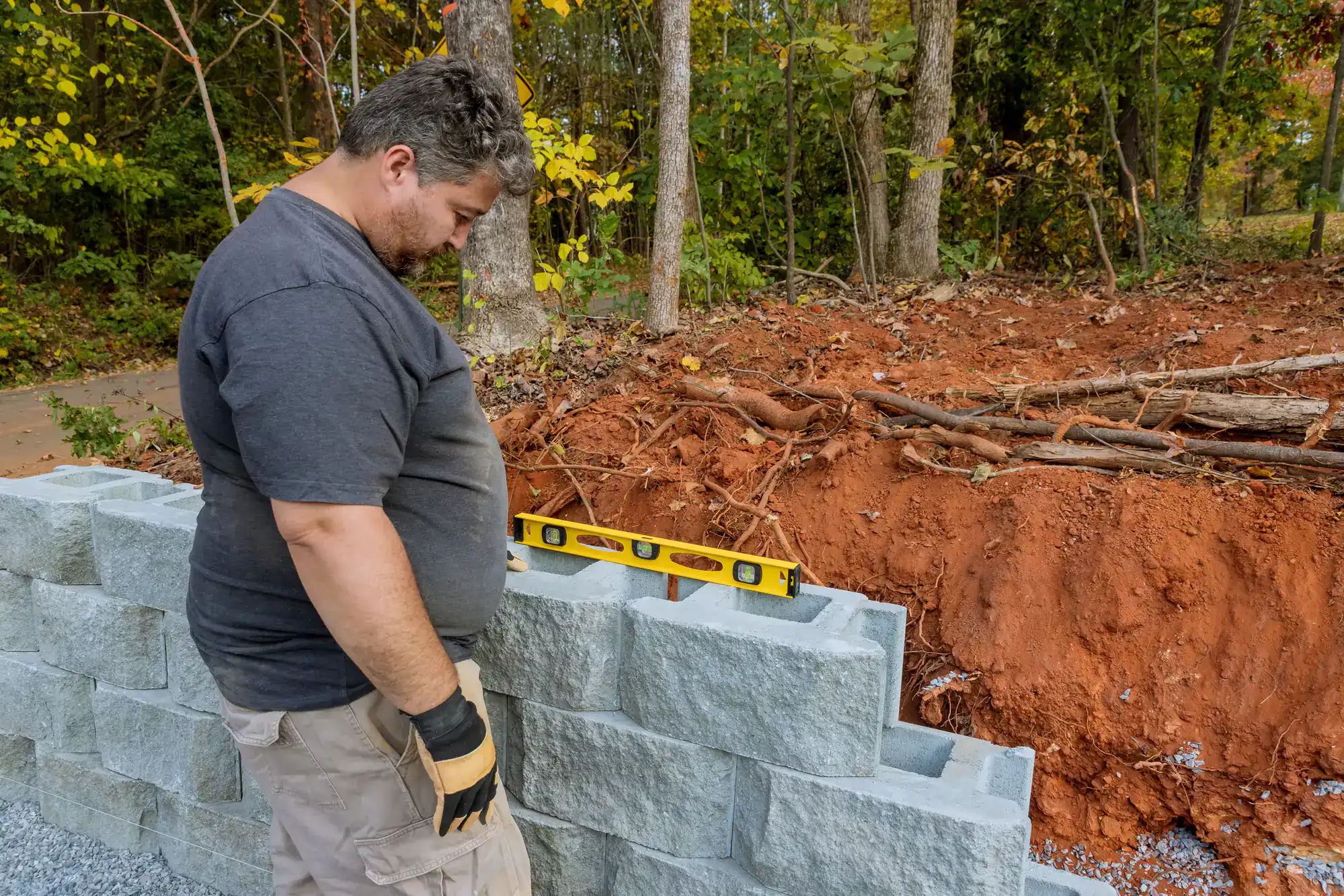
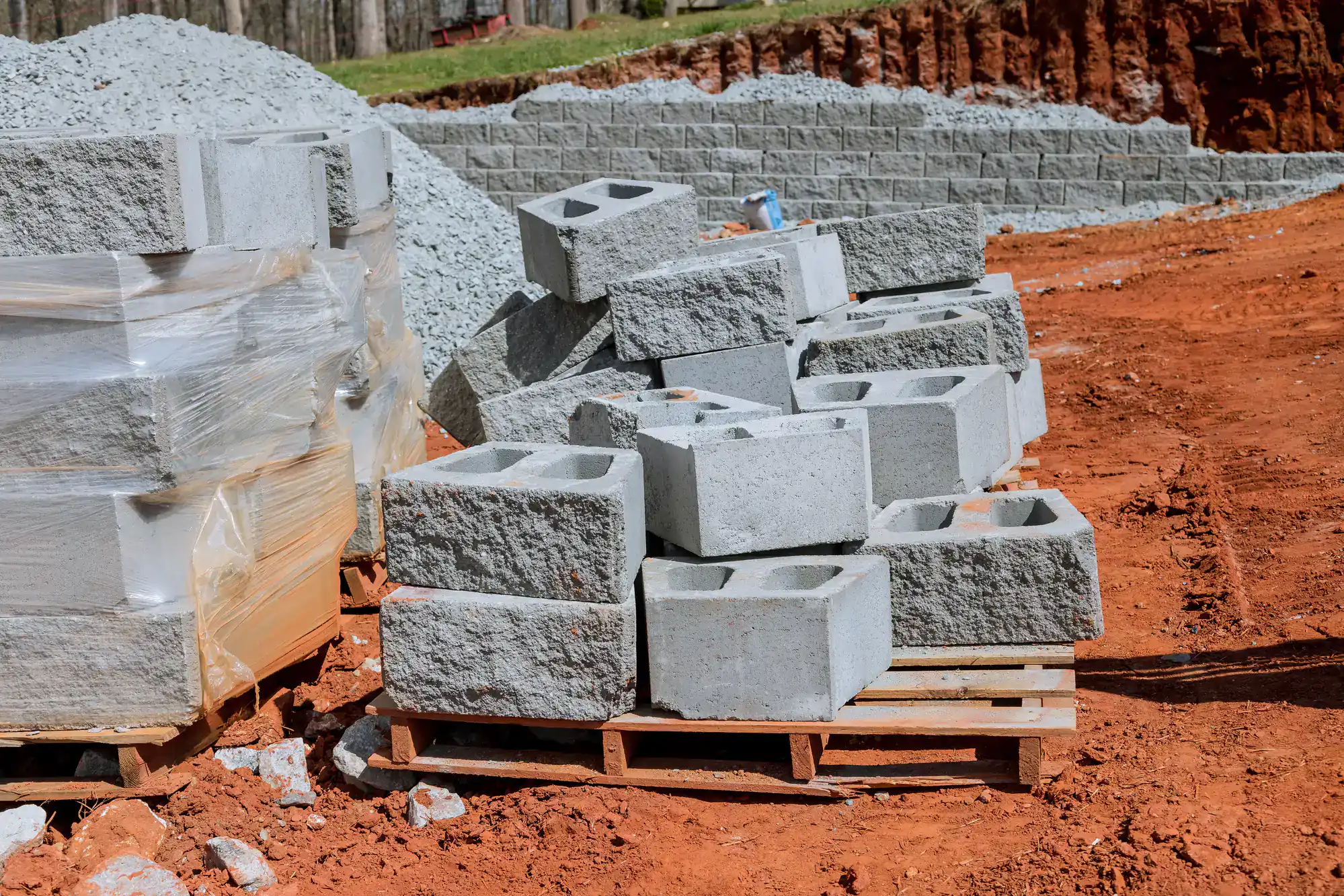
We use segmental block walls with interlocking concrete systems because they accommodate the slight movement in sandy soil while maintaining structural integrity. These systems offer variety in colors and textures to match your home’s style.
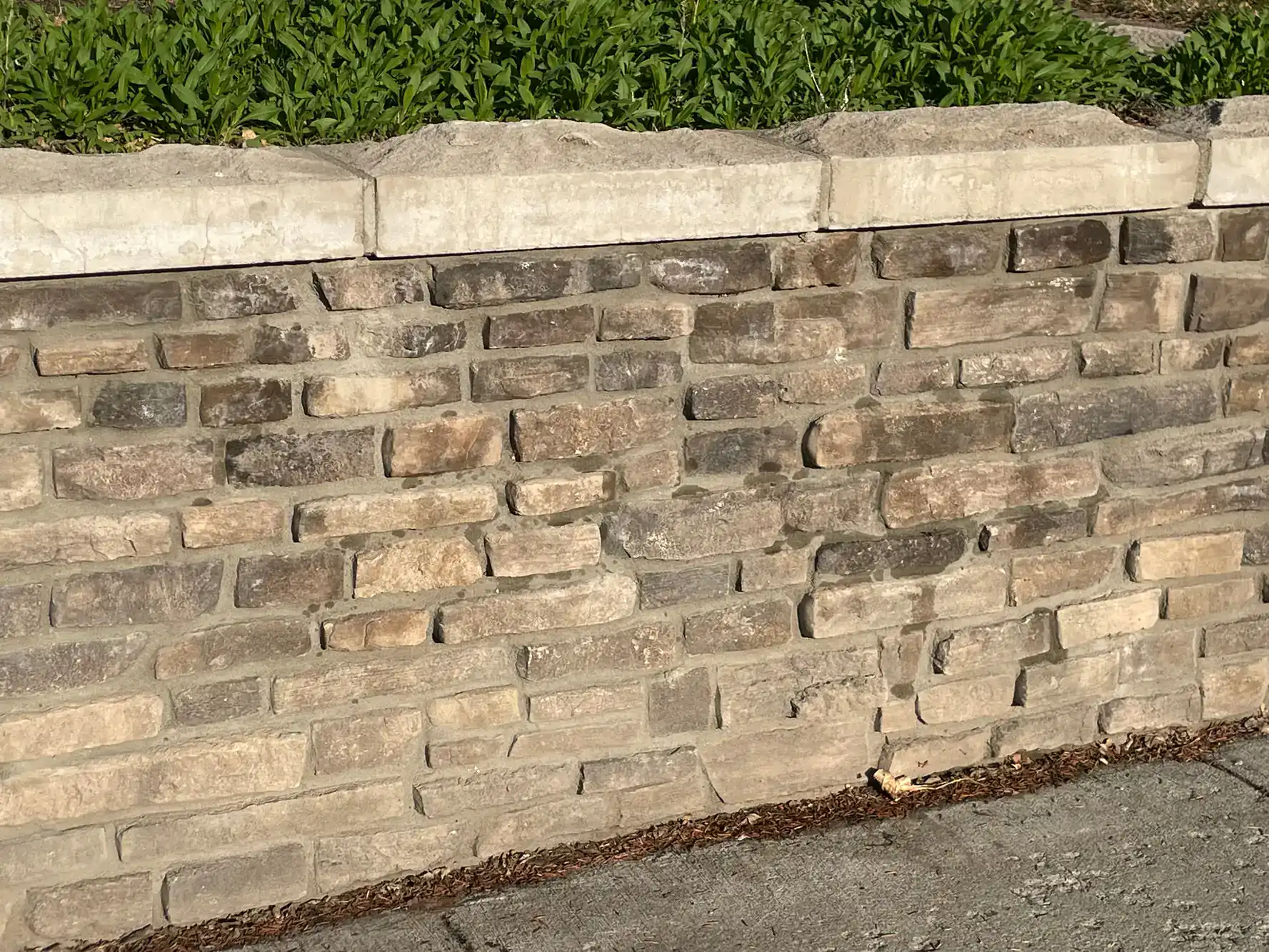
Natural stone works well for Long Island’s traditional and coastal home styles, offering timeless appeal and exceptional longevity when properly installed. Local materials like fieldstone create attractive solutions that increase property values.
The key is using frost-resistant materials and proper foundation depth to prevent wall failure. We’re certified with Cambridge, Techo‑Bloc, Unilock, and other manufacturers whose materials are specifically designed for coastal weather exposure.
Professional retaining wall installation typically costs $25-45 per square foot in the Long Island area, depending on height, location access, and material selection. A 50-foot wall generally runs between $4,000 and $10,000.
The cost depends on several factors including wall height, site conditions, drainage requirements, and material choice. Walls over 4 feet often need engineering design, which adds to the cost but ensures safety and code compliance.
Remember that a properly built retaining wall can increase your property value by up to 15%. When you factor in preventing costly erosion damage and creating usable space, it’s an investment that pays for itself.
Most municipalities require permits for retaining walls over 3-4 feet tall. Permit costs range from $50 to $450 depending on your location and wall size, and we handle the application process for our clients.
Walls 4 feet or higher usually need a structural engineer’s design to ensure safety and code compliance with Nassau and Suffolk County requirements. Engineering fees range from $500 to $2,000+ depending on project complexity.
Local zoning regulations often require engineered retaining walls for properties with significant elevation changes, especially in flood zones. We’re familiar with the specific requirements for Hauppauge and surrounding Long Island communities.
With quality materials and expert installation designed for Long Island conditions, your retaining wall should serve your property for decades. We’ve seen well-built walls last 50+ years with minimal maintenance.
The key is proper installation with adequate drainage, foundation depth below the frost line, and materials designed for coastal weather exposure. Shortcuts in any of these areas dramatically reduce lifespan.
Regular maintenance includes checking for cracks, ensuring drainage systems stay clear, and addressing small issues before they become expensive problems. Annual inspections help catch potential issues early, especially after severe weather events.