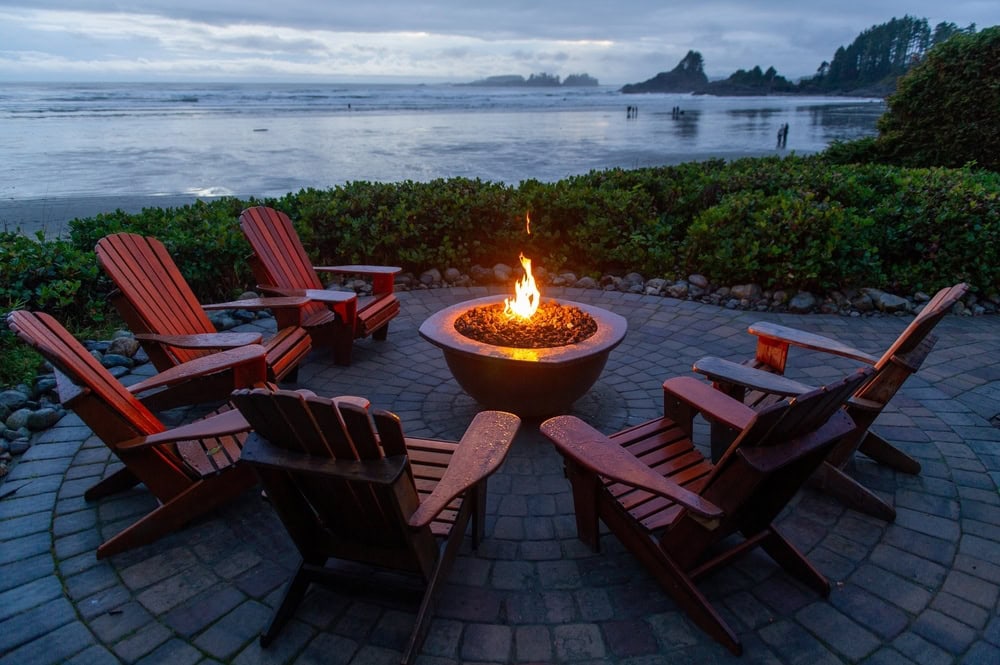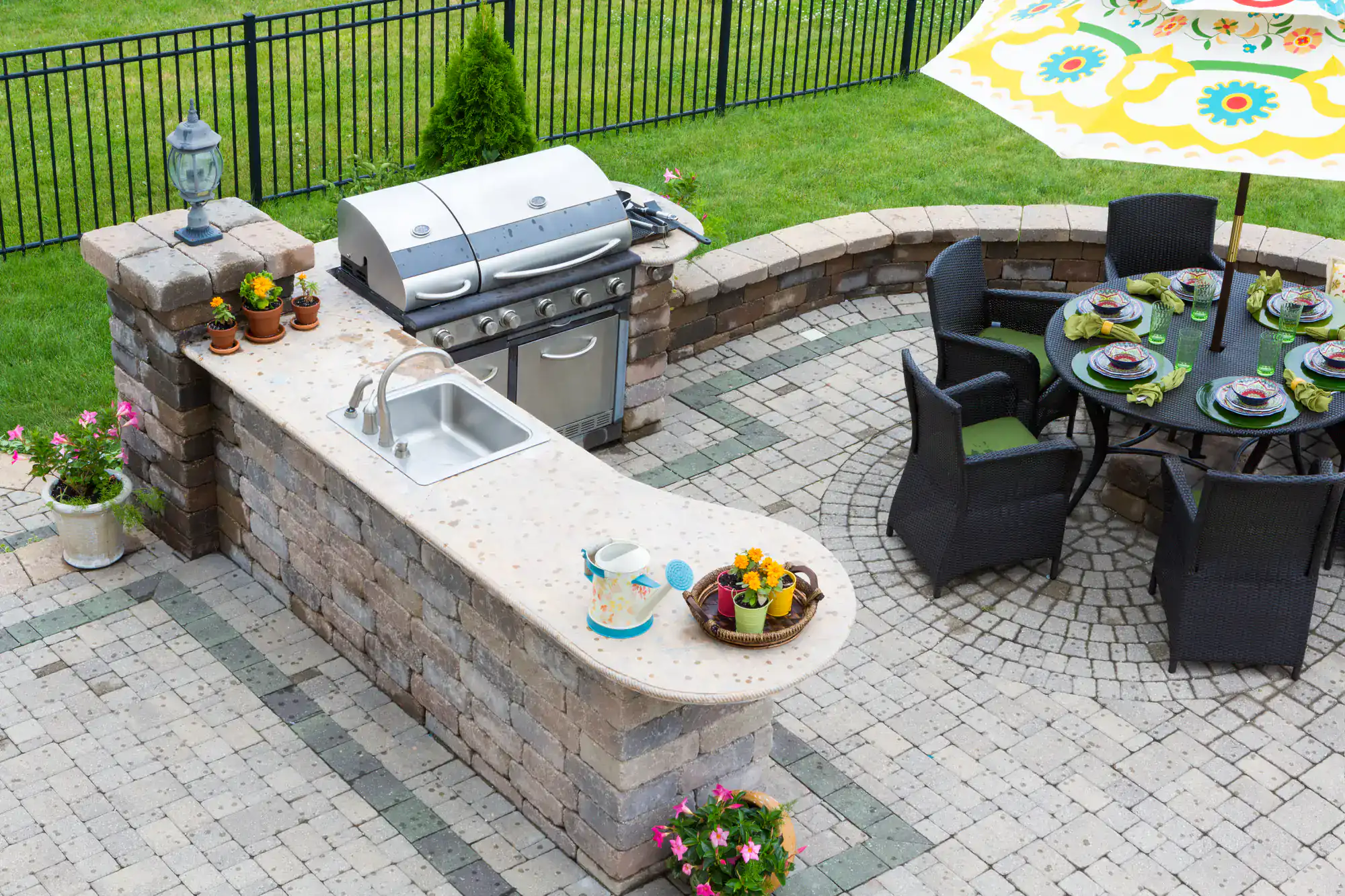
Complete guide to outdoor fire pits for Long Island homeowners covering styles, safety requirements, and professional installation considerations.
Share:

Summary:
Today’s fire pits go far beyond the basic metal ring your dad might have used. Modern designs blend functionality with aesthetics, creating focal points that complement your home’s architecture and your family’s lifestyle.
Geometric shapes are replacing traditional circular designs, with square and rectangular fire pits offering contemporary aesthetics and better heat distribution for comfortable gathering. These angular designs work especially well with modern outdoor furniture and create visually striking centerpieces.
Gas-powered fire pits are gaining popularity for their convenience and clean-burning operation, allowing easy on/off control without the hassle of managing wood. For Long Island homeowners who value efficiency, gas options eliminate smoke concerns and provide instant ambiance.

The fuel choice significantly impacts your fire pit experience, maintenance requirements, and long-term costs. Each option serves different priorities and lifestyles.
Gas-powered units offer smartphone control convenience and electric igniters like gas stoves, eliminating the need for gas lines or electricity runs to your pit location. Gas fire pits provide instant ignition, adjustable flame controls, and smokeless operation, making them highly user-friendly with portability and refillable propane tank compatibility.
Wood-burning options appeal to those wanting that authentic campfire experience – the smell of burning wood, glowing embers, and captivating crackle and snap sounds. New York State regulations require only dry, clean, untreated, and unpainted wood with constant supervision and proper extinguishing procedures.
Gas installations require professional setup for safety and code compliance. Installation crews need to dig trenches for gas lines and electricity, with costs varying based on location and difficulty of running these connections. Wood-burning pits offer simpler installation but require ongoing fuel sourcing and ash cleanup.
Consider your entertaining style. Gas provides consistent, controllable flames perfect for planned gatherings. Wood creates that authentic outdoor experience but demands more hands-on management. Natural gas and electricity may have lower operating costs than wood, even with higher upfront installation costs.
The fuel choice significantly impacts your fire pit experience, maintenance requirements, and long-term costs. Each option serves different priorities and lifestyles.
Gas-powered units offer smartphone control convenience and electric igniters like gas stoves, eliminating the need for gas lines or electricity runs to your pit location. Gas fire pits provide instant ignition, adjustable flame controls, and smokeless operation, making them highly user-friendly with portability and refillable propane tank compatibility.
Wood-burning options appeal to those wanting that authentic campfire experience – the smell of burning wood, glowing embers, and captivating crackle and snap sounds. New York State regulations require only dry, clean, untreated, and unpainted wood with constant supervision and proper extinguishing procedures.
Gas installations require professional setup for safety and code compliance. Installation crews need to dig trenches for gas lines and electricity, with costs varying based on location and difficulty of running these connections. Wood-burning pits offer simpler installation but require ongoing fuel sourcing and ash cleanup.
Consider your entertaining style. Gas provides consistent, controllable flames perfect for planned gatherings. Wood creates that authentic outdoor experience but demands more hands-on management. Natural gas and electricity may have lower operating costs than wood, even with higher upfront installation costs.
Long Island fire pit ownership comes with specific safety requirements and local regulations that protect both your family and your community. Understanding these rules prevent costly mistakes and ensures safe enjoyment.
New York State Department of Environmental Conservation allows backyard fire pits and campfires less than three feet in height and four feet in diameter, with only charcoal or dry, clean, untreated, or unpainted wood permitted, requiring constant supervision and complete extinguishing.
Small, contained campfires and backyard fire pits are typically permitted under strict conditions during burn bans, provided they meet size limits and use only clean, untreated wood or charcoal. Local municipalities may impose stricter regulations, so checking with your specific town is essential.
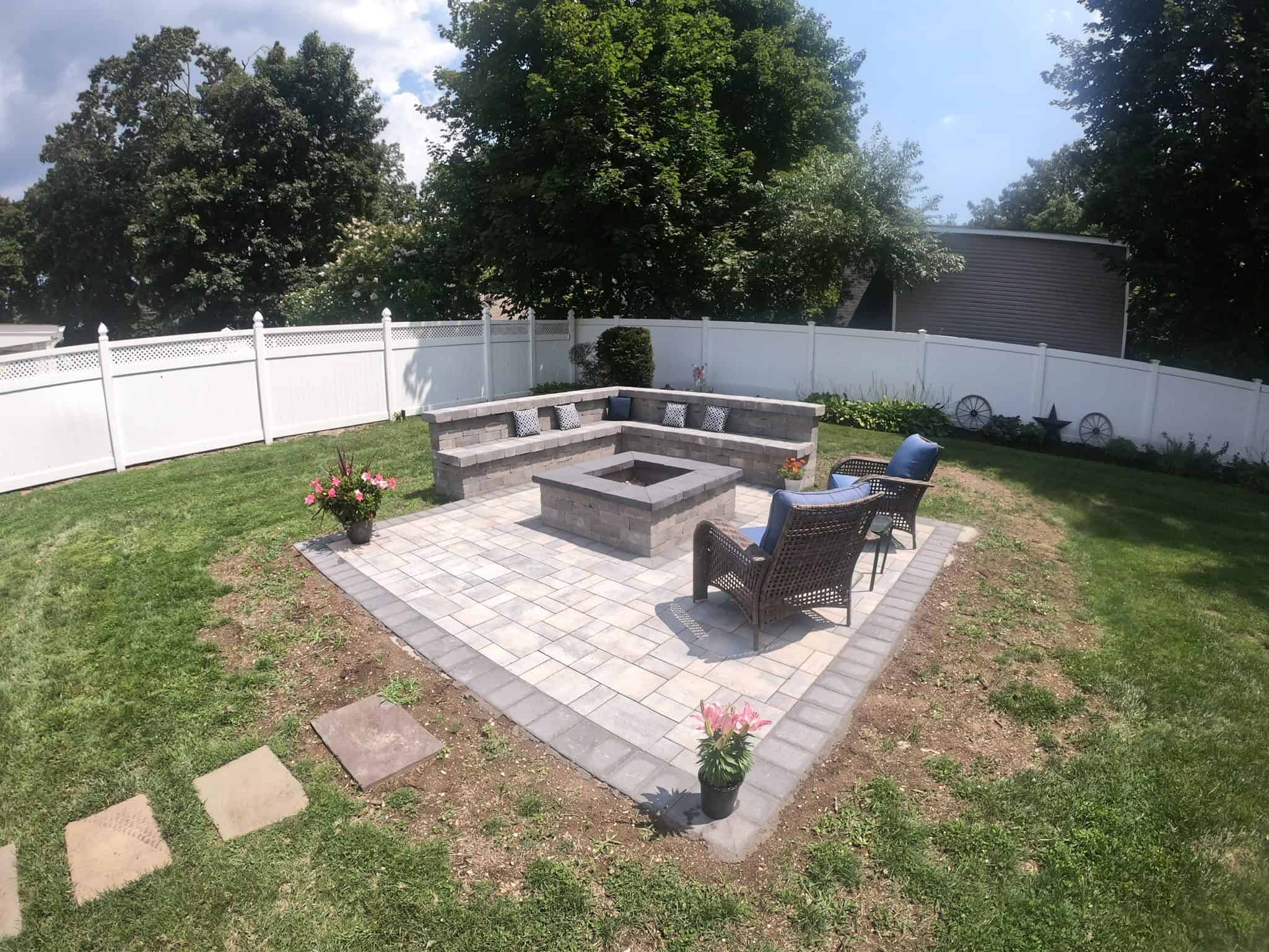
Fire pits must be installed on level areas at least 15 feet away from any flammable structures or objects. Place your fire pit at least 10 feet from trees, structures, shrubs or decks, position seating at least 7 feet from open flames, and close all nearby doors and windows.
At least one adult should constantly attend open flames, as unattended recreational fires are illegal and incredibly dangerous, with homeowners never leaving fire pit fires burning unattended or allowing fires to slowly die out overnight. Keep a garden hose, bucket of sand, or Class B or C dry-chemical fire extinguisher nearby for immediate fire suppression.
Check weather reports before starting fires, as windy conditions increase ember risks that could reach your house, other structures, or trees – postpone fires during gusting winds. Burning debris poses serious safety risks, as embers can easily blow from fire pits and ignite nearby trees, shrubs, or homes, with the National Fire Protection Association noting backyard fire embers pose the same threats as wildfire embers.
Reduce smoke production by avoiding green, leafy branches with high moisture content, using long-stemmed matches with natural tinder and kindling, and choosing hardwoods like oak, ash and hickory over softwoods like pine and cedar. Never use paper, cardboard, magazines, newspapers or particleboard as kindling due to toxic chemicals and excess smoke when burned.
Fire pit installation costs average $850, with projects typically ranging between $200 and $3,000 depending on size, location, and build quality, though custom designs can reach $5,000 or more. Understanding cost factors helps you budget appropriately and avoid surprise expenses.
Key factors affecting costs include fire pit type (in-ground, above-ground, portable), size, materials (concrete, brick, stone, metal), and fuel source (wood, gas, electric). Simple wood-burning fire pits cost less than adding stonework or masonry, while gas-powered installations vary depending on location and difficulty of running gas lines and electricity.
Installing fire pits above or integrated with patios adds significantly to total expenses, with patio construction averaging $3,500, retrofitting existing patios up to $5,000, and building new patios with built-in fire pits averaging $6,750. Stone patios with fire pits cost $2,200 to $6,800 for 144 to 225 square feet, with total costs varying by design and materials.
Professional installation ensures safety compliance and proper construction techniques. Handyman rates run $50-80 per hour for building, gas plumbers charge $45-150 per hour for gas line installation, and electricians cost $40-100 per hour for new wiring. Local regulations may require permits ranging from $20-500 each, with electrical and plumbing permits costing up to $500 each.
Installation timing depends on style and size, with simple wood-burning pits taking just three days to install, while elaborate fireplaces or gas-powered units require one to two weeks. Professional installation provides warranties, proper safety compliance, and eliminates costly mistakes that could require expensive corrections later.
Your outdoor fire pit investment should enhance your lifestyle while adding lasting value to your property. The right choice depends on balancing your entertaining needs, maintenance preferences, budget considerations, and local regulations.
Whether you view a fire pit as the ultimate focal point or bonus backyard element, it becomes a game changer that unites people together, extends gatherings past dark, and creates lasting memories for kids, adults, and even pets. With average returns of 67-80% on investment, fire pits provide both immediate enjoyment and long-term property value.
Success starts with choosing experienced professionals who understand Long Island’s specific conditions and regulations. We bring the expertise, licensing, and local knowledge to transform your backyard vision into a safe, beautiful, and functional outdoor living space that your family will enjoy for years to come.
Article details:
Share:
Continue learning: